One plant polymer is somehow found into almost everything you use and see like your toothpaste, tablets, ice-cream, etc. Every one of those item traces back to the same molecule, and that molecule spent its first life holding a plant upright.
It is cellulose, the main structural component of plant cell walls and the most abundant organic polymer on Earth. Chemistry-wise it has glucose units joined end to end in long unbranched chains. And yet almost nothing you buy contains cellulose in that original state. What it contains are cellulose derivatives.
Why Raw Fibre Is Difficult to Use
Each glucose unit along a cellulose chain carries three hydroxyl groups. Those hydroxyl bond to the ones on neighbouring chains, over and over, until the chains lock into tightly packed crystalline regions.
Cellulose is surrounded by water-loving groups yet it will not dissolve in water. It resists ordinary organic solvents too. Heat it and it chars before it melts, so there is no melting point to extrude or mould from. Klemm et al. (2002) describe a stiff-chain, semicrystalline polymer whose hydrogen bonding governs nearly all of its behaviour.
For most of industrial history that left two honest options i.e. use the fiber as a fiber, which gives you paper and cotton thread, or break it down to sugars and start over. Anything between the two meant persuading cellulose to dissolve or soften without destroying it.
Types of Cellulose Derivatives
Cellulose ethers:
Made by steeping cellulose in alkali and reacting it with an alkyl halide or an epoxide. Sodium carboxymethyl cellulose picks up negatively charged carboxymethyl groups; commercial grades sit well below one substitution per glucose unit, which is enough to make it water-soluble and a powerful thickener. It stabilizes ice cream against ice crystal growth, gives toothpaste its body, keeps loosened dirt suspended in detergent, and thickens drilling fluid on oil rigs.
Methylcellulose and hydroxypropyl methylcellulose (HPMC) do something counterintuitive. Their solutions gel when heated and go liquid again as they cool, the reverse of gelatin. That inversion is why HPMC holds a plant-based patty together while it cooks, and why it works as a vegetarian capsule shell. Hydroxyethyl cellulose and ethyl cellulose go mostly into paints, shampoos and film coatings.
He et al. (2025) call cellulose ethers the “monosodium glutamate” of industry, as a small dose changes how entire mixture behaves.
Cellulose esters:
In cellulose esters, the original hydroxyl groups are acylated instead of alkylated, typically using acetic anhydride. The real workhorse here is cellulose diacetate at a degree of substitution near 2.5. This versatile material shows up in everything from spectacle frames and textile yarn to filtration membranes and cigarette filter tow.
Pushing the substitution even further toward 3 yields cellulose triacetate, which historically formed the base for photographic film and optical layers. When flexibility is key, chemists turn to mixed esters like cellulose acetate butyrate, which are specifically tailored for durable, pliable coatings.
Microcrystalline cellulose:
Microcrystalline cellulose (E 460(i)) is the unique outlier here because no new chemical groups are attached to it. Instead of modifying the molecules, a controlled acid bath simply eats away the loose, disordered regions of the raw cellulose, leaving behind pure, highly crystalline fragments.
This process creates a remarkably versatile material: it compresses into a rock-hard tablet under pressure, yet breaks apart effortlessly the moment it touches water. That dual ability is precisely why it serves as one of the most widely used tablet fillers in the pharmaceutical world.
On safety, the European Food Safety Authority re-evaluated the whole cellulose family and concluded that no numerical acceptable daily intake was required and that there was no safety concern at the reported levels of use, with low acute toxicity and no genotoxic concern (EFSA ANS Panel, 2018).
Substitution buys processability, but sells something else.
The additional group that stops cellulose from bonding to itself also stops enzymes from recognizing it. Reviewing degradation from laboratory, engineered and natural settings, Edral and Hakkarainen (2022) found that the type of modification, and the degree of substitution is what decides whether a derivative breaks down in a given environment.
Cellulose acetate is the material behind the industry’s biggest environmental debate, driven mostly by cigarette filters.
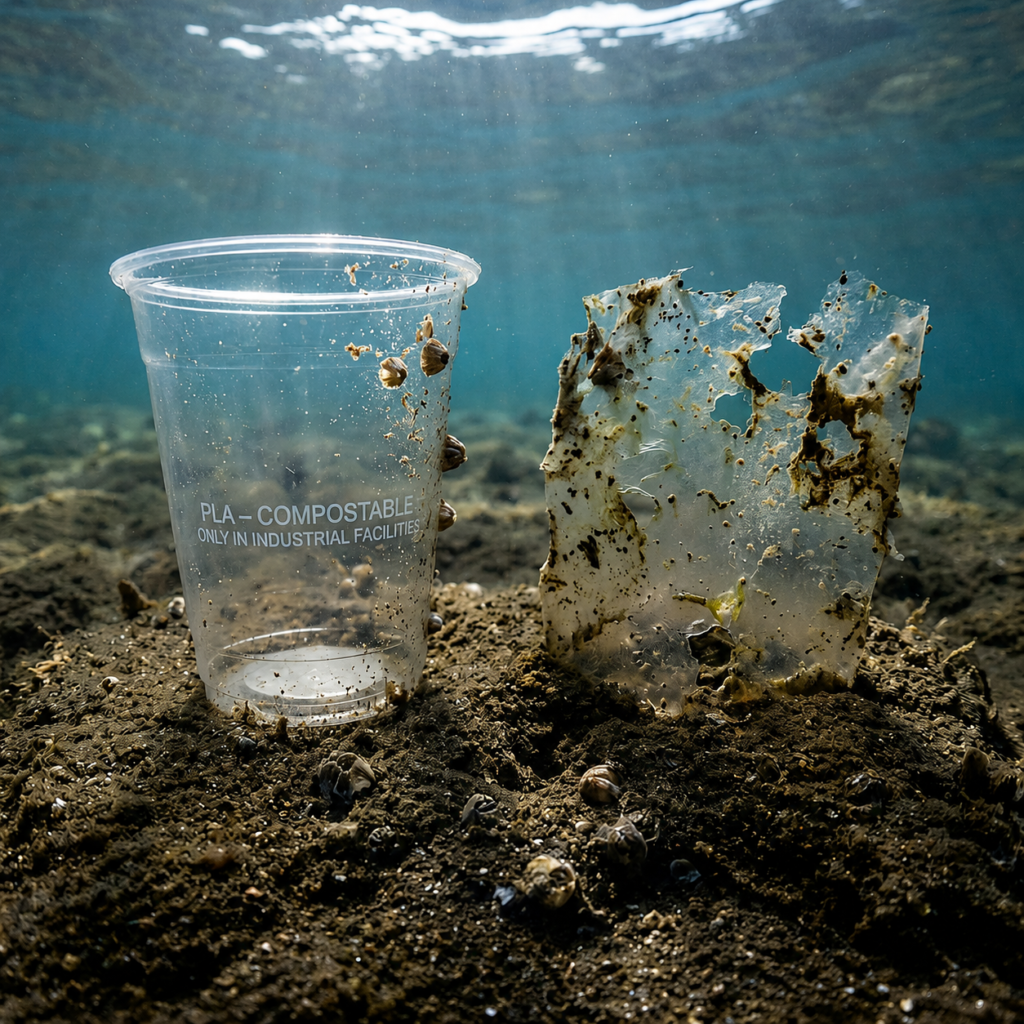
When Tan et al. (2023) submerged acetate tow and film for sixteen weeks, they measured less than a 3% weight loss in river water and seawater, compared to a massive 40% loss in sodium hydroxide. On paper, those numbers painted it as a stubborn, persistent plastic.
However, Serbruyns et al. (2024) reframed the picture by testing the material against natural microbial communities rather than standard laboratory strains. In their tests, cellulose diacetate at DS 2.5 achieved over 90% relative biodegradation in freshwater within roughly 100 days. The catch was a 75-day lag phase while the local microbes adapted; seeding the environment with pre-adapted organisms cut that wait down to just five days.
So, the same thing that made cellulose useful now sets its end of life. Formulators are pushing the number down wherever an application tolerates it, and chemist are building linkages designed to be cut back off, returning the backbone to ordinary cellulose once the product is done.
From Plant Fiber to Finished Product
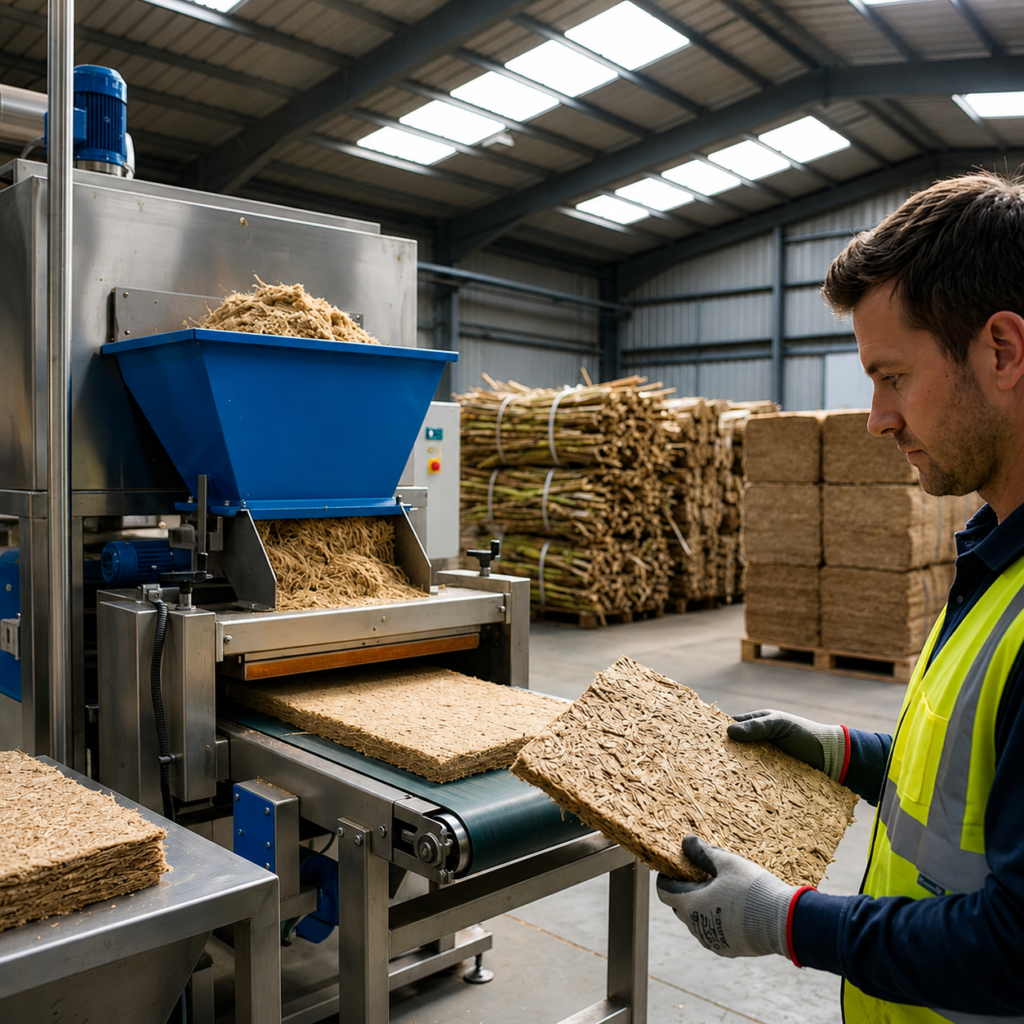
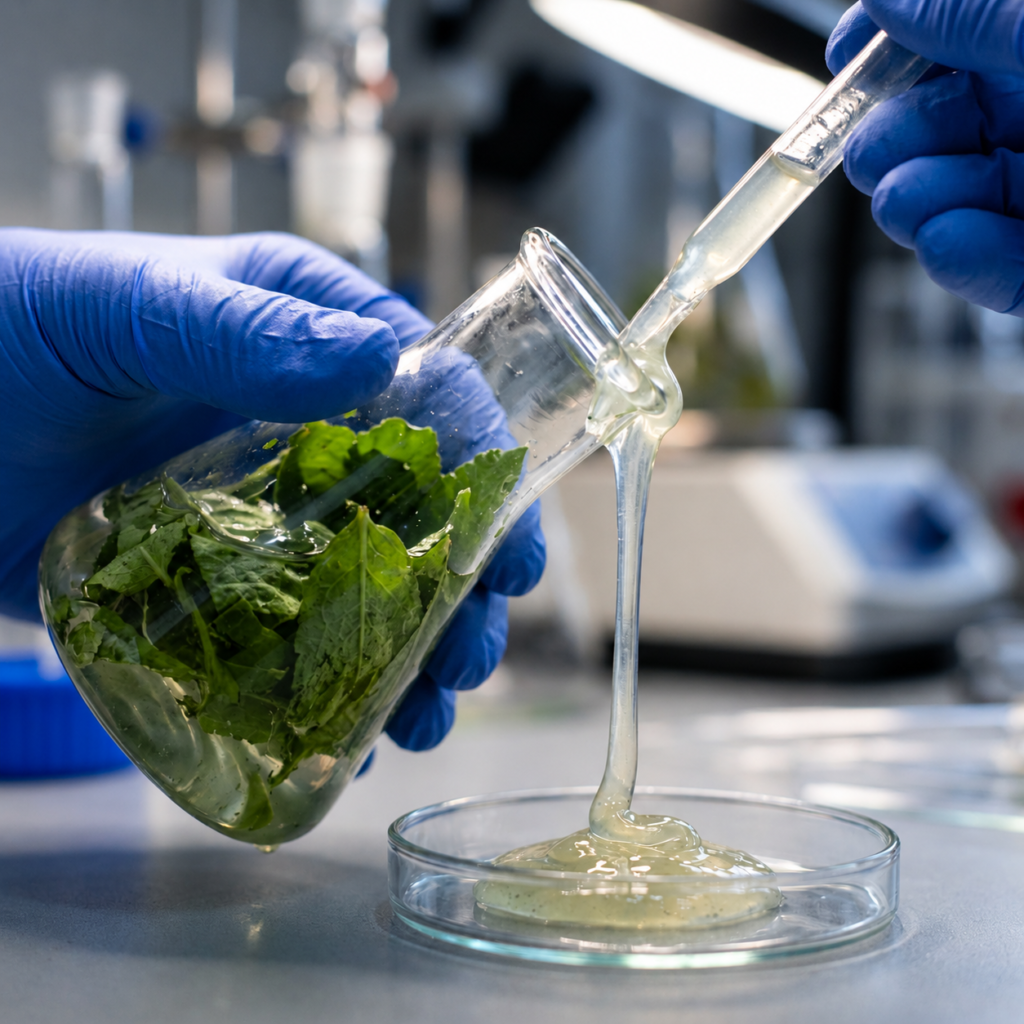
Follow the production process forward and you’ll find it surprisingly straightforward. Raw wood pulp or cotton linters arrive at the facility, get soaked in caustic soda, and react with specific reagents under tightly controlled temperatures and pressures. Once the reaction is complete, the resulting cellulose derivative is washed clean of salts, dried, ground down, and sifted.
What leaves the factory floor isn’t sold under a simple trade name, but by exact specs like viscosity grade, degree of substitution, and target particle size. While the fundamental chemistry dates back a century and a half, the modern refinement and pinpoint control make it a whole new material.
That is the reason cellulose derivatives have outlasted several generations of fashionable materials. The raw materials regrows, the properties can be tuned, and one supplier can serve a bakery, a paint plant and a hospital pharmacy just from adjacent reactors. The question is while making cellulose behave like a plastic, how much of its original biodegradability can survive that journey.
Frequently Asked Questions
What is the difference between cellulose and cellulose derivatives?
Cellulose is the unmodified polymer taken from wood pulp or cotton. It is insoluble and cannot be melted. A cellulose derivative is that same cellulose after it is treated. In the cellulose structure some of its hydroxyl groups are chemically replaces which makes it dissolve, gel. Form films or flow. Microcrystalline cellulose is the exception as it is purified and shortened rather than chemically altered.
What types of cellulose derivatives are used most?
Four dominate. CMC as a thickener and stabilizer; HPMC in construction mortars, capsules and controlled-release tablets; cellulose acetate for fibres, frames, membranes and filter tow; and microcrystalline cellulose as a tablet excipient. Ethyl cellulose and hydroxyethyl cellulose follow, mostly coatings and personal care.
Are cellulose derivatives safe in food?
EFSA re-assessed celluloses E 460 to E 469 and determined that their acute toxicity is very low, and there is no genotoxic risk involved; therefore, the EFSA panel concluded that there is no safety concern regarding their consumption at the reported usage levels as no numerical Acceptable Daily Intake needed (EFSA ANS Panel, 2018).
Reference
Arca, H. C., Mosquera-Giraldo, L. I., Bi, V., Xu, D., Taylor, L. S., & Edgar, K. J. (2018). Pharmaceutical applications of cellulose ethers and cellulose ether esters. Biomacromolecules, 19(7), 2351–2376. https://doi.org/10.1021/acs.biomac.8b00517
EFSA Panel on Food Additives and Nutrient Sources added to Food (ANS). (2018). Re-evaluation of celluloses E 460(i), E 460(ii), E 461, E 462, E 463, E 464, E 465, E 466, E 468 and E 469 as food additives. EFSA Journal, 16(1), Article 5047. https://doi.org/10.2903/j.efsa.2018.5047
Erdal, N. B., & Hakkarainen, M. (2022). Degradation of cellulose derivatives in laboratory, man-made, and natural environments. Biomacromolecules, 23(7), 2713–2729. https://doi.org/10.1021/acs.biomac.2c00336
He, M., Lin, Y., Huang, Y., Fang, Y., & Xiong, X. (2025). Research progress of the preparation of cellulose ethers and their applications: A short review. Molecules, 30(7), Article 1610. https://doi.org/10.3390/molecules30071610
Klemm, D., Heublein, B., Fink, H.-P., & Bohn, A. (2005). Cellulose: Fascinating biopolymer and sustainable raw material. Angewandte Chemie International Edition, 44(22), 3358–3393. https://doi.org/10.1002/anie.200460587
Serbruyns, L., Van de Perre, D., & Hölter, D. (2024). Biodegradability of cellulose diacetate in aqueous environments. Journal of Polymers and the Environment, 32(3), 1326–1341. https://doi.org/10.1007/s10924-023-03038-y
Tan, J., Liang, Y., Sun, L., Yang, Z., Xu, J., Dong, D., & Liu, H. (2023). Degradation characteristics of cellulose acetate in different aqueous conditions. Polymers, 15(23), Article 4505. https://doi.org/10.3390/polym15234505