As the world searches for alternatives to conventional
plastics, plant-based and biodegradable packaging is often presented as a more
sustainable choice. But the terms “biodegradable,” “compostable,” and
“plant-based” can be misleading if we do not understand what happens to these
materials after disposal. The real environmental impact of packaging depends
not only on what it is made from, but also on where and under what conditions
it is discarded.
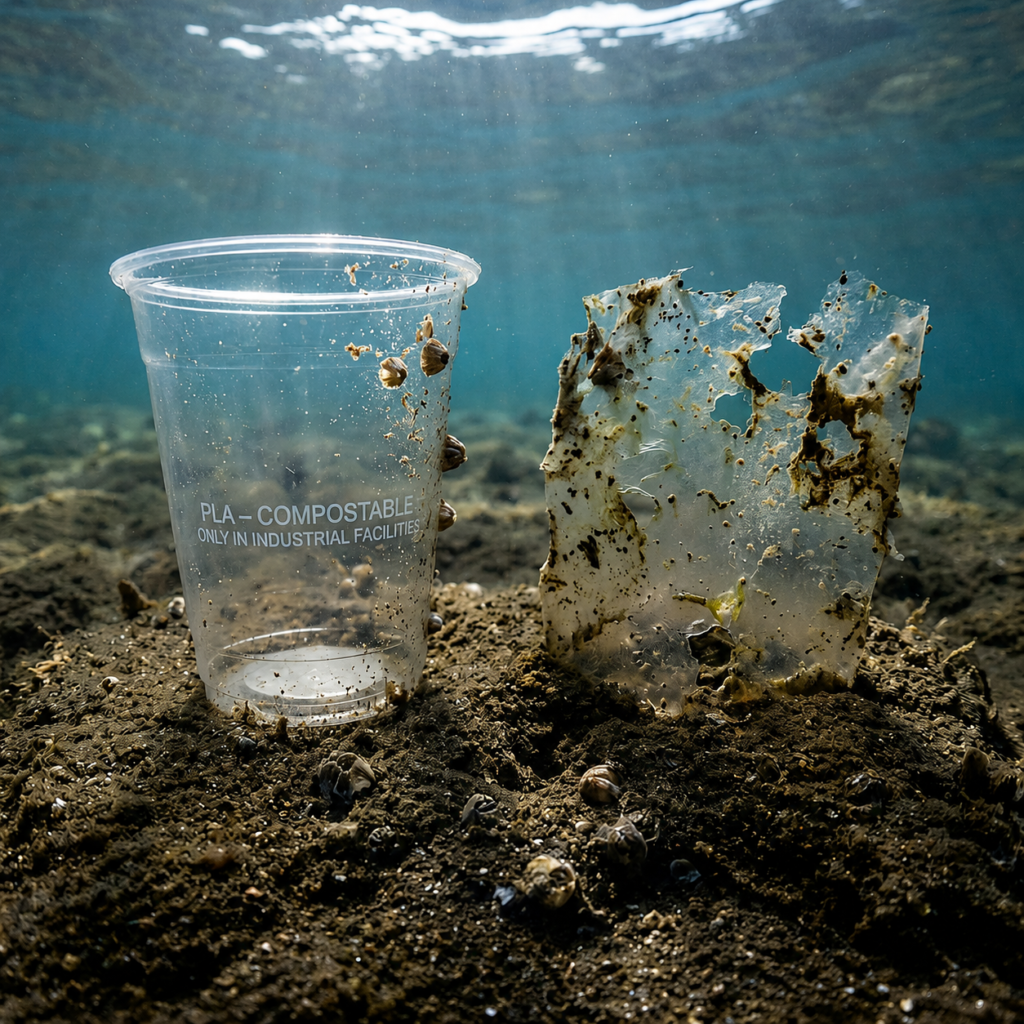
In 2024, a Japanese research team conducted an interesting
experiment to see how different plastics behave in the deep ocean. They placed
plastic sheets on the ocean floor, with some reaching depths of 5,552 metres,
and left them there for up to 14 months. Some of the samples were made from
PHA, a type of polyester naturally produced by bacteria. These PHA samples
slowly broke down even in the cold, dark conditions of the deep sea. However, a
sample made from PLA, a plant-based plastic commonly used for compostable cups,
lids, and cutlery, showed almost no change after the experiment (Omura et al.,
2024).
Both the materials are plant-based and both of them are
marketed as biodegradable but only one of them was able to actually break down.
This is precisely the most useful thing a beginner can learn
about plant-based packaging.
The Term “Plant-Based”
“Plant-based” only tells us where the material originated from,
not what happens to it after it is thrown away. These are two different things,
but packaging is often promoted based on its plant-based origin, which can make
shoppers think it will also break down naturally.
Sugarcane is a good example. Sugarcane can be fermented to
make ethanol, which can then be used to produce bio-based polyethylene.
Although this plastic comes from plants instead of crude oil, it behaves almost
the same way in the environment as regular polyethylene and does not easily
break down. In simple terms, it is renewable when it is produced, but it can
still remain in the environment for a long time after use.
Common Packaging Materials
·
PLA (polylactic acid): made by fermenting
plant sugar, usually from corn or sugarcane, into lactic acid and linking it
into a clear, rigid polyester. It is used in cups, lids, trays and film.
·
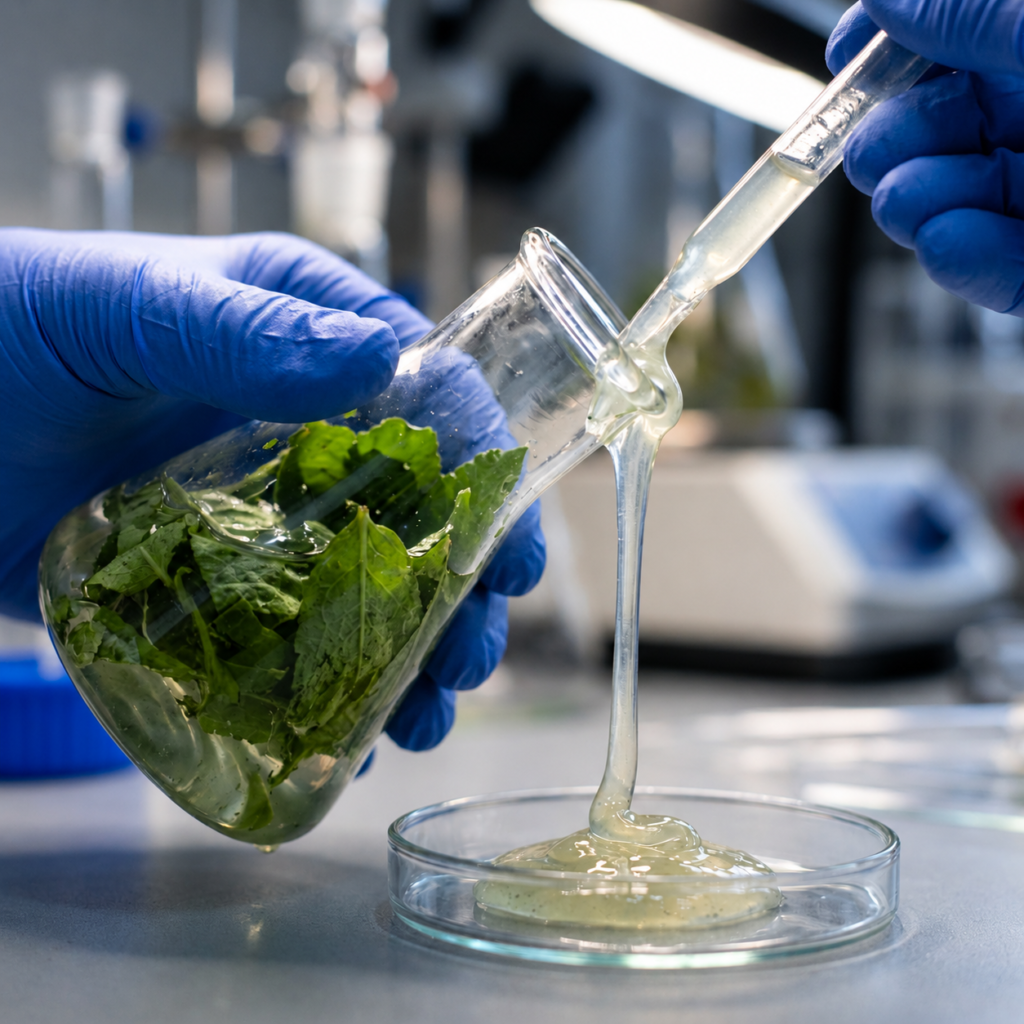
PHA (polyhydroxyalkanoates): polyesters
made by microbes as an energy store. It is harvested by fermentation. PHA can
degrade in any given environment.
·
Starch blends: plant starch combined with
a flexible polyester, often fossil-derived PBAT, to make carrier bags and
liners.
·
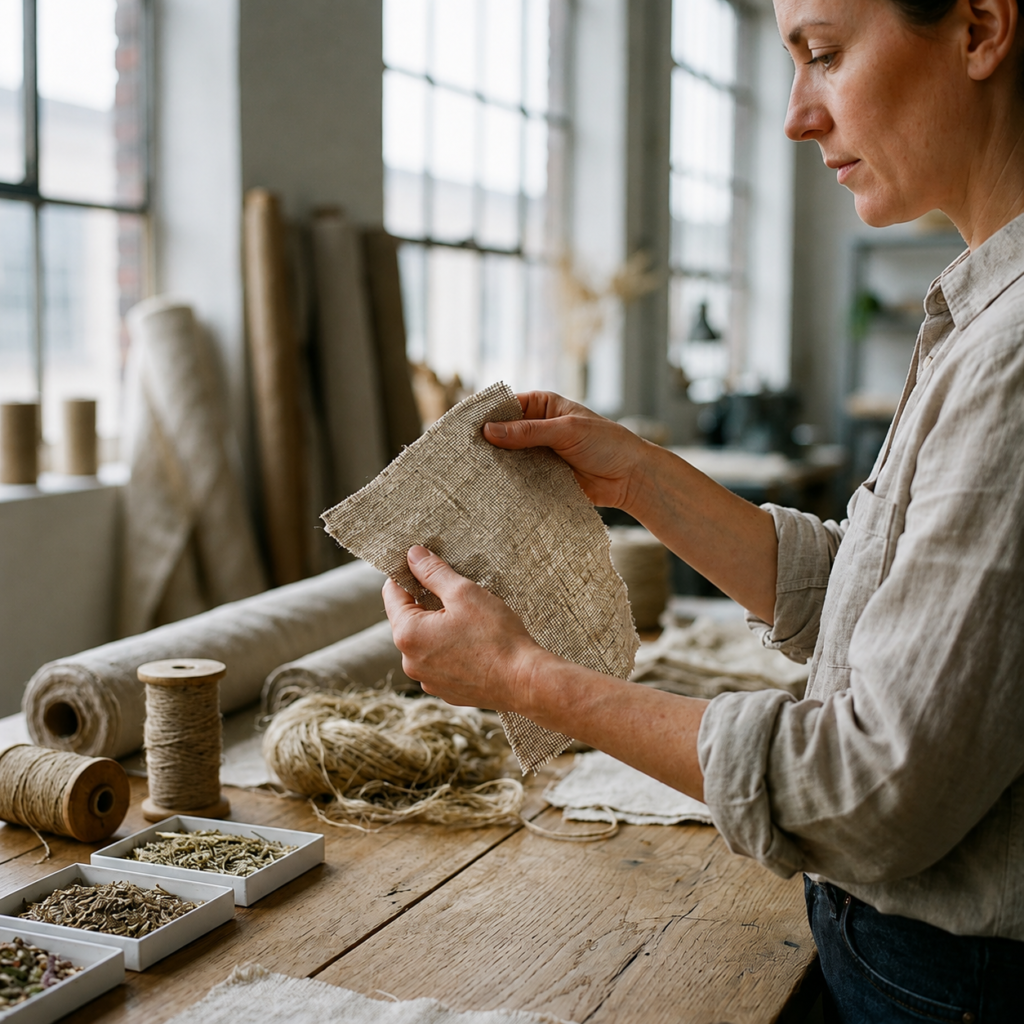
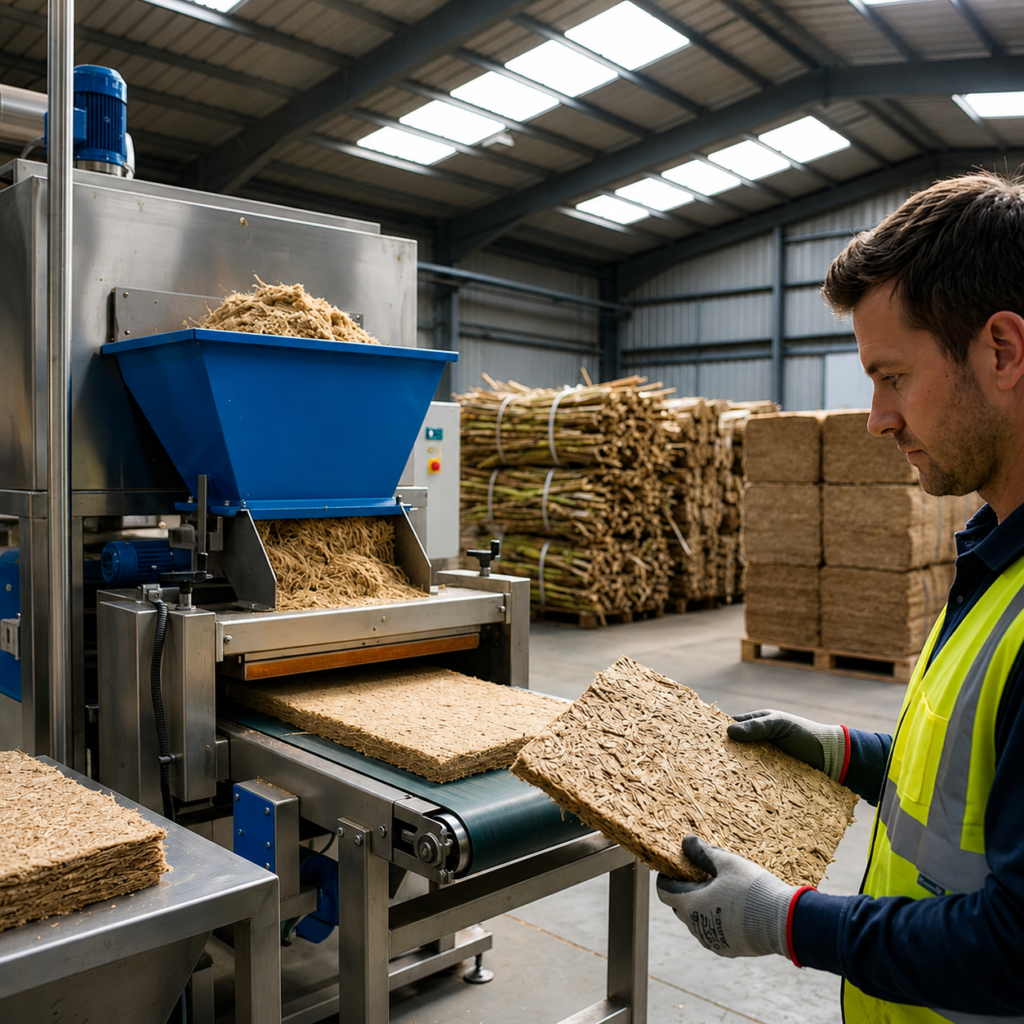
Moulded fibre: bagasse (the fibrous pulp
left after sugarcane is juiced), bamboo or wheat straw, pressed into
clamshells, bowls and plates.
·
Regenerated cellulose films: transparent
wood-pulp films used as wrappers and windows.
Different Condition, Different Outcome
The same PLA cup can have very different outcomes depending
on where it ends up.
Industrial Composting:
This is the environment PLA was designed for. PLA is exposed
to high temperatures of around 60 °C or more, controlled moisture, regular
turning, and active microorganisms. These conditions allow PLA to break down
through hydrolysis and then biodegrade within the time required by composting
standards. However, the cup must first reach an industrial composting facility.
Home Compost Bin:
In a home compost bin, the conditions are usually not
suitable for PLA because household compost piles often do not become hot,
moist, or biologically active enough. A University College London study
involving nearly 10,000 UK households found that 55% of tested items were still
clearly visible at the end of home-composting trials. Even among products
labelled as TÜV OK compost HOME certified, 60% were still visible (Purkiss et
al., 2022).
Soil or Open Water:
In here results can vary. One study found that a compostable
bag disappeared from seawater within three months but remained in soil after 27
months, while biodegradable and conventional polyethylene bags were still able
to carry shopping after three years in seawater (Napper & Thompson, 2019).
PHA can behave differently and has been shown to gradually degrade in marine
environments, although complete breakdown can still take years (Dilkes-Hoffman
et al., 2019).
Landfill or Recycling Bin:
Landfills contain very little oxygen, which slows normal
biodegradation. If a compostable cup enters a plastic recycling facility, it
can contaminate the recycling process and usually needs to be removed and
thrown away.
Weight of the Word
Used alone, the word biodegradability promises very little.
Everything biodegrades eventually but in different time spans. For anything to
biodegrade, conditions and timelines are different.
The term compostable is more useful because it should be
supported by a specific standard and certification. In Europe, the main
standard is EN 13432, while the United States uses ASTM D6400. Certifications
include the Seedling logo, TÜV OK compost INDUSTRIAL, TÜV OK compost HOME, and
BPI certification. However, industrial compostability and home compostability
are not the same thing, and this often causes confusion for buyers. A UCL study
found that 46% of the products tested by households had no compostable
certification, while another 14% had only an industrial composting
certification even though they were being tested in home garden compost bins
(Purkiss et al., 2022).
Regulators are also becoming more careful about how
compostable packaging is used. Under the EU’s Packaging and Packaging Waste
Regulation, compostable packaging is allowed mainly for specific products where
it can provide a clear environmental benefit. These include some single-serve
coffee, tea and beverage products, very lightweight carrier bags, and a few
other types of packaging already required by individual EU countries. This
shows that compostable packaging is not considered a better choice for every
situation. Instead, it is seen as a useful option only where it is suitable and
provides a clear benefit.
Global bioplastic production capacity reached 2.31 million
tonnes in 2025 and is forecast to hit 4.69 million tonnes by 2030. Packaging is
the biggest single use, at 41.3%. Set against 431 million tonnes of plastic
produced worldwide each year, bioplastics are still about 0.5% of the total
(European Bioplastics, 2025).
A packaging industry of this size has not yet developed
enough collection and waste-management systems to handle all the materials it
produces. This creates a major challenge because packaging can only work as
intended when the correct disposal system is available. In simple terms,
choosing the right packaging material is not enough; there must also be a
proper way to collect, process, and dispose of it in the place where the
product is sold.
Frequently Asked Questions
Is biodegradable the same as compostable?
No. Compostable is a subset of biodegradable with rules
attached that the material must break down within a set timeframe, under
defined conditions and leave no harmful residue. It also should be verified
against a stamdard such as EN 13432 or ASTM D6400. “Biodegradable” on its own
names no condition and no deadline.
Can I put compostable packaging in my home compost bin?
Only if it is specifically certified for home composting,
and even then the results are mixed. In the UCL Big Compost Experiment, 60% of
home-compost-certified items were still clearly visible at the end of household
trials (Purkiss et al., 2022). Industrial-certified items should never go in a
home bin.
Is bio-based packaging automatically better for the
climate?
Not necessarily. Using plant-based raw materials can reduce
the use of fossil resources during production, but it does not automatically
mean that the packaging is better for the environment. Its overall impact also
depends on factors such as how much land is used to grow the raw materials, the
energy needed to process them, transportation, and what happens to the
packaging after use. Therefore, the best way to understand whether a particular
packaging material is environmentally better is to look at a life-cycle
assessment that considers the specific product and the region where it is
produced and used.
Reference
Dilkes-Hoffman, L. S., Lant, P. A., Laycock, B., &
Pratt, S. (2019). The rate of biodegradation of PHA bioplastics in the marine
environment: A meta-study. Marine Pollution Bulletin, 142, 15–24. https://doi.org/10.1016/j.marpolbul.2019.03.020
European Bioplastics. (2025, December). Bioplastics
market development update 2025. https://www.european-bioplastics.org/bioplastics-market-development-update-2025/
Napper, I. E., & Thompson, R. C. (2019). Environmental
deterioration of biodegradable, oxo-biodegradable, compostable, and
conventional plastic carrier bags in the sea, soil, and open-air over a 3-year
period. Environmental Science & Technology, 53(9), 4775–4783. https://doi.org/10.1021/acs.est.8b06984
Omura, T., Isobe, N., Miura, T., Ishii, S., Mori, M.,
Ishitani, Y., Kimura, S., Hidaka, K., Komiyama, K., Suzuki, M., Kasuya, K.,
Nomaki, H., Nakajima, R., Tsuchiya, M., Kawagucci, S., Mori, H., Nakayama, A.,
Kunioka, M., Kamino, K., & Iwata, T. (2024). Microbial decomposition of
biodegradable plastics on the deep-sea floor. Nature Communications, 15,
Article 568. https://doi.org/10.1038/s41467-023-44368-8
Purkiss, D., Allison, A. L., Lorencatto, F., Michie, S.,
& Miodownik, M. (2022). The Big Compost Experiment: Using citizen science
to assess the impact and effectiveness of biodegradable and compostable
plastics in UK home composting. Frontiers in Sustainability, 3, Article
942724. https://doi.org/10.3389/frsus.2022.942724
Regulation (EU) 2025/40 of the European Parliament and of
the Council of 19 December 2024 on packaging and packaging waste. Official
Journal of the European Union, L 2025/40. https://eur-lex.europa.eu/eli/reg/2025/40/oj