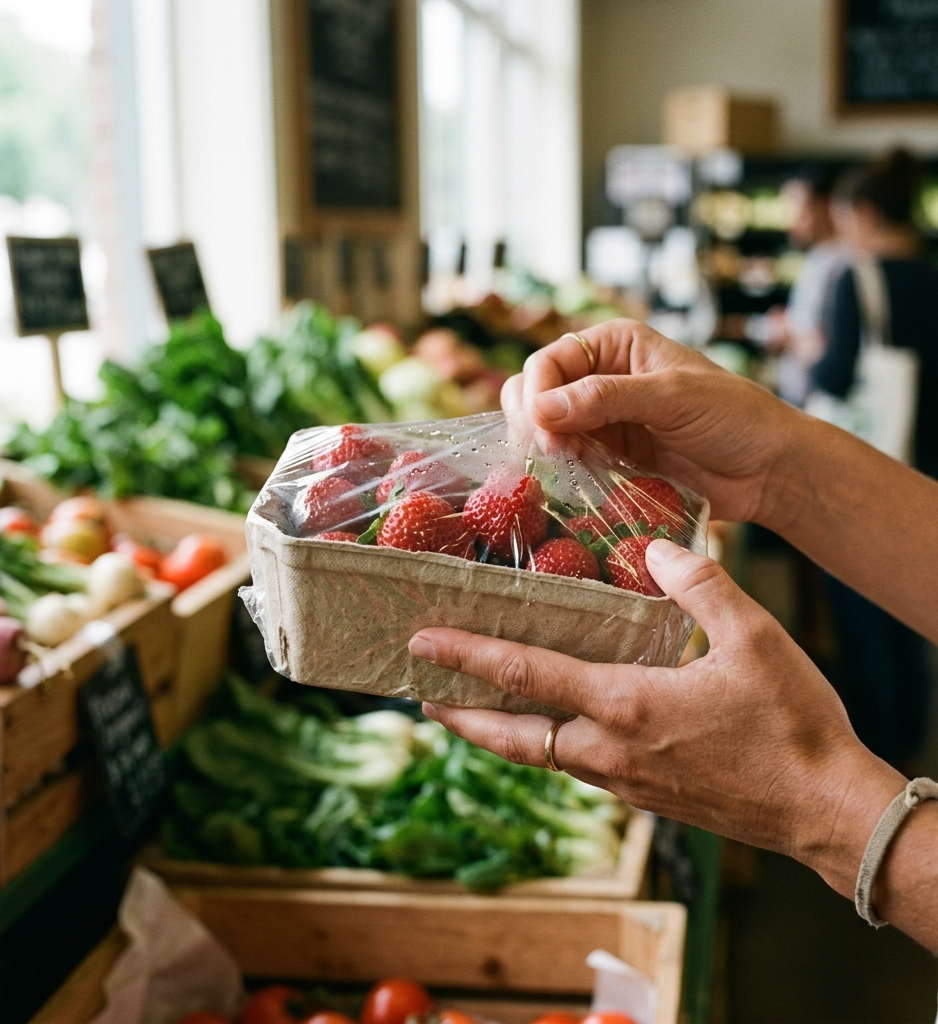

Somewhere between the Instagram post announcing a brand’s sustainability commitment and the first shipment of new packaging, things get complicated. The supplier quotes are higher than expected. The minimum order quantity (MOQ) is double what you move in a quarter. The material performs beautifully in the sample and then warps in transit later. Nobody writes about that part.
But they should because for small and mid-sized brands, a packaging switch isn’t just a materials decision. It touches cash flow, product safety, customer perception, and supplier relationships all at once. The switch is worth making but understanding how to make it takes more work.
The Consumer Pull
According to a 2025 Shorr Packaging consumer report, 70% of consumers expect sustainability in the products they purchase.
There are numerous factors contributing to these expectations. However, the largest percentage of consumers switching from one brand to another is due to packaging issues, 39% stated that they had switched brands as a result of packaging-related problems. For small brands, this isn’t simply a trend in the market rather it’s a serious obstacle to keeping customers.
Younger generations tend to be even more quick to react to packaging issues than their older counterparts. In fact, almost 50% of both Gen Z and Millennials indicated a willingness to pay a premium price for sustainability through packaging. And in a 2026 UPrinting survey, 32% of consumers indicated they’d pay a premium for 6%-10% more for sustainable/eco-friendly designs. For manufacturers operating in saturated product categories, that price variance could represent a meaningful profit opportunity.
The Trap Most Small Brands Fall Into First
The mistake isn’t switching. The mistake is switching everything at once, under pressure and that too without a pilot run.
Three obstacles stand in the way of brands moving towards sustainable packaging.
According to McKinsey’s 2025 Packaging Report it is:
- Higher costs of materials
- Uncertainty of product performance when transported/stored
- Unreliable supply from sustainable material vendors
Smaller brands are hit harder with these challenges because they are not able to absorb the costs of a failure in packaging while larger companies can. A mid-size company typically has a very limited ability to absorb the cost of a defective run of packaging.
7% of all companies have successfully implemented large-scale changes to their sustainability initiatives. Companies that have had success in transforming their sustainability practices generally focus on improving 5 areas concurrently:
- Benchmarks
- Legislation
- Infrastructure
- Consumer Behaviour
- Technology
Often times, the cost issue is blown out of proportion, but it genuinely exists at lower volumes of production. Sustainable materials have a higher cost/quantity, due to their production being in a smaller scale than petroleum sourced polymers. As order volumes increase the equation does change, but many new brands experience ‘sticker shock’ before they have had an opportunity to achieve scale.
What A Smart Switch Actually Looks Like
Several suppliers that specialize in this niche even provide MOQs of just 250 pouches/bags for compostable packaging, which is easily achievable by most expanding brands. This has been done by brands such as noissue and Elevate Packaging. What the majority of SMBs need to do is not revamp everything but do it in stages.
- Audit, don’t assume. Before switching materials, map which packaging actually touches the customer versus what’s purely logistical. Customer-facing packaging is where the brand signal lives and where the switch pays off fastest.
- Run a single-SKU pilot. Test one product line before committing the entire range. This lets you evaluate real-world performance like moisture, transit stress, shelf appearance without risking your whole inventory.
- Verify certifications before you print claims. Terms like “eco-friendly” or “biodegradable” carry no legal weight. BPI Compostable (US) and EN13432 (EU) certifications do. Greenwashing is a reputational risk that hits small brands disproportionately hard.
- Ask about mix-and-match MOQs. Some suppliers let you combine seasonal and regular packaging designs against one shared MOQ, dramatically lowering the entry cost for small runs.
The Regulation Timeline Is the Real Deadline
The preference of the consumer drives the consumer market. Therefore, consumer regulation is a must have. The European Packaging Directive has been available since February 2025 and requires some form of reusable or recyclable characteristics to the packaging by 2030. California’s SB 54 is moving forward with laws that mandate Producers to be responsible for sustainable packaging as well. If you are a small company that exports to the European Union or California, you are already creating your products under these regulations whether you know it or not.
Enabling your own timeline incrementally is less expensive and less disruptive than enabling your own timeline when under pressure of a deadline to enable it. The global sustainable packaging market in 2025 was worth $314 billion. There is finally enough infrastructure available to support smaller brands. There is still a window to transition to this new market thoughtfully and just not indefinitely.
Frequently asked questions
Q: How much more will sustainable packaging actually cost my brand?
Volume and material are key factors here. With smaller volume orders (less than 1,000 items), there can be an added cost of 15-30% compared to standard plastics. The cost differential is substantially reduced with larger volumes. The approach for most small and medium businesses is to incorporate this cost differential into the final price point, because it appears that some customers will pay up to 6-10% more.
Q: What’s the difference between “recyclable,” “biodegradable,” and “compostable” and which should I choose?
However, all three terms are not interchangeable. Recyclable is a material that can be reused to go back into production. However, this is only possible with an established system for recycling at the local level. Biodegradable has no legal definition and no standard timeline. Compostable is the most regulated term, certified compostable packaging (BPI or EN13432) breaks down under specific industrial conditions within 180 days. For food-contact or customer-facing packaging, compostable with a certified mark is the most defensible claim.
Q: My brand is small. Do regulations actually apply to me?
Yes, absolutely, if you are selling in regulated markets. PPWR from the EU (2025) and SB 54 from California will apply depending on the location to which your product will be delivered and not your headquarters. Companies that are distributing their products Direct to Consumer (DTC) or via online marketplaces like Amazon that are shipping to EU nations or California fall under its ambit right now.