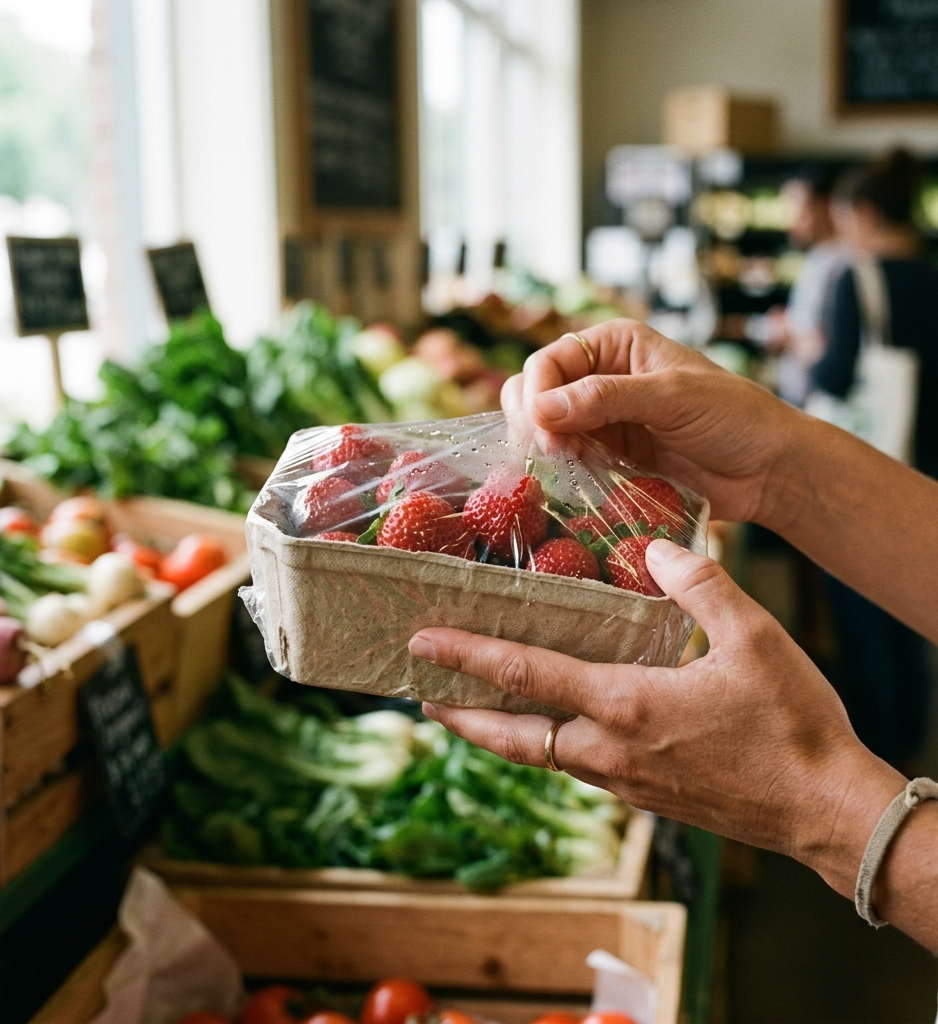
Imagine walking into a supermarket where you find the tomatoes in trays made from compressed sugarcane pulp, cheese block wrapped in a whey-protein film and strawberries in a micro-perforated cellulose. And none of these wraps and films will survive a landfill beyond six months. All of it is going to degrade back into the earth one day.
Does that sounds fiction to you?
But this is exactly the future and the future is powered by a wave of materials science to protect our future and to protect our planet.
The Problem with the Wrapper We Trust
The physical properties of plastic wrap are incredible. They can form almost complete oxygen barriers, are resistant to moisture, can survive thermal cycling, and can be manufactured so that they will release their gases at a known rate. The food industry’s cold chain has been designed using these properties of wrapping material. The price of these products was hidden from consumer for decades due to their approximately 400 years of existence in the environment.
Sustainable food packaging globally is anticipated to be valued at 72.4 billion dollars in 2024 and reach 139.0 billion dollars by 2033. The growth of the mid-long term sector is the result of consumers and regulators finally agreeing that environmental obligation must be satisfied at some point. In the EU, new Regulations on Packaging and Packaging Waste will require all packaged food to be manufactured to allow reuse or recycle by 2030. In California SB 54 is doing the same thing.
Data that Changed the Conversation
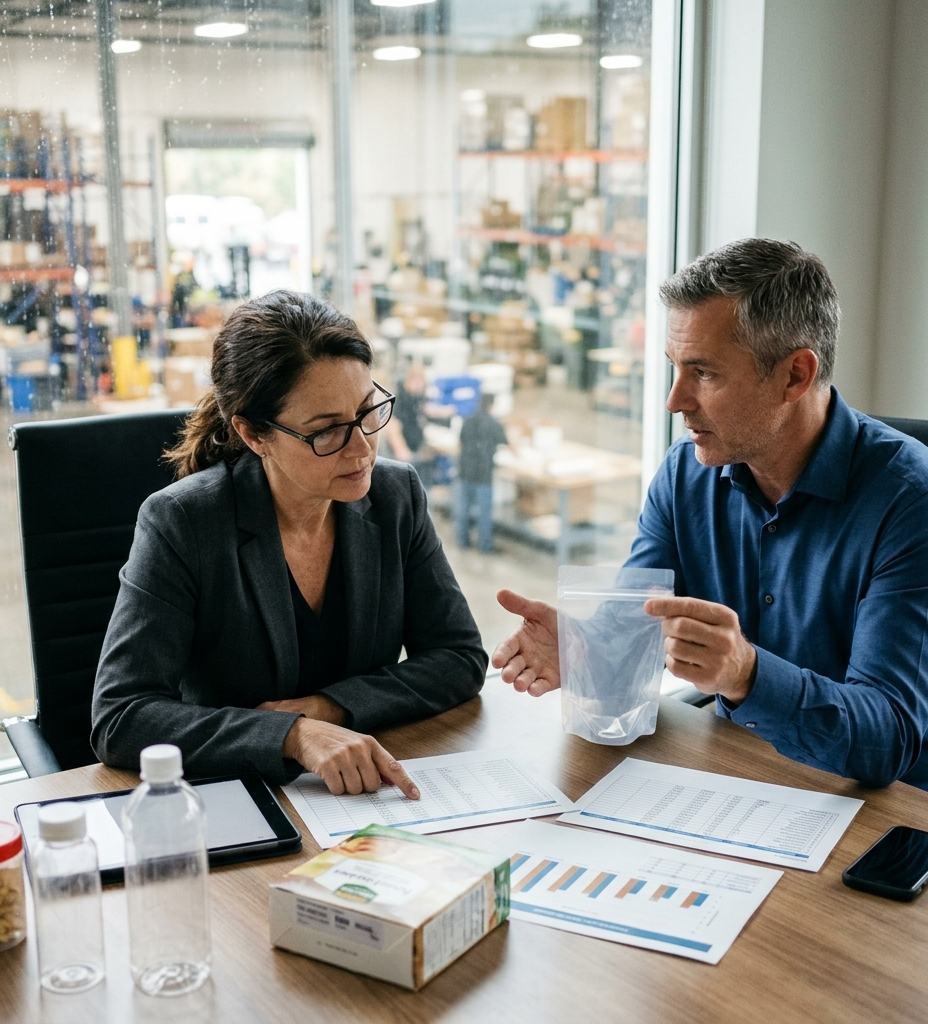
For years, sustainability advocates and food scientists talked past each other. Environmentalists wanted compostable but food technologists pointed out that compostable materials let in too much moisture, too much oxygen, and shortened shelf life which ironically increases food waste, the very problem good packaging exists to prevent.
Then the research was getting to industry standards with a significant study completed in 2018 at Israel’s Agricultural Research organizations comparing micro-perforated compostable packaging versus conventional plastic packaging using bell pepper produce as an example.
The research found that compostable packaging preserved produce for 21 days, same shelf-life as the plastic alternative. In 2024, a new study, He et al. would advance this by developing an embedded stretchable sensor system in a compostable fish pack to monitor the gas evolution of the fish resulting in doubling the shelf-life of fish to up to 14 days, and being entirely compostable.
The mechanism behind this progress is layered:
Natural antimicrobials like green tea polyphenols and nano-cellulose coatings are now being integrated into biodegradable trays which is verified in a 2023 EFSA study. These are functional barrier systems that mimic what synthetic polymers do, using chemistry the soil already knows how to break down.
Where Compostable Still Struggles
Honesty matters here.
Not all food types can currently use compostable packing materials. For instance, biodegradability of these materials is often compromised by the moisture content of the food (e.g., foods with high moisture), the distances required to transport these products through a supply chain (e.g., foods that have to be transported over long distances), and the temperature at which they are delivered (e.g., prepared meals that are transported and delivered warm).
In a review published in 2024 in the journal Comprehensive Reviews in Food Science and Food Safety, Turan et al. found that in order for packaging to meet the true definition of end-of-life compostability, it would have to be able to be composted using industrial composting facilities, and in the US, only about 5% of food waste is processed through an industrial composting facility. As a result, much of the food waste continues to remain in the landfill longer than desired.
The limited accessibility for residential food-waste collection has created a significant infrastructure gap. In the US, only about 14.9 million households have access to some form of residential food-waste collection.
Even certified compostable materials are not guaranteed to compost properly unless minimum conditions based on heat, moisture, and microbial activity are met.
The Next Layer
What’s exciting is how all of this material will provide the infrastructure for all of this embedding like location-based tagging, etc.
Carrefour (France)’s new initiative with their “Act for Food” pilot in 2024 that uses NFC and QR codes embedded in compostable trays, allowing shoppers to access cold chain compliance and product recall information with their smartphones in real-time.
Global corporations are now creating AI-assisted digital representations of their products that take sensor data and build inventory management systems to automate the rotation of stock before it exceeds its shelf life.
So, the evolution of packaging from being just a wrap but to now being a node within the supply chain and increasingly a compostable item.
Frequently asked questions
Q: Does compostable packaging always break down quickly in the environment?
Not necessarily. The design of certified compostable products allows for the biodegradation of the product in an industrial composting environment where there are specified temperatures, humidity levels, and microorganisms. At home, in the composter, or in the landfills, it will take much longer for the item to degrade.
Q: Is food in compostable packaging actually as safe as food in plastic?
For most fresh produce categories, recent research says yes and sometimes better. For example, micro-perforated compostable films have demonstrated comparable shelf-life qualities to plastics for vegetable products in experiments. High-risk foods such as fish now feature an additional embedded antimicrobial layer made with natural extracts, which prolongs their shelf life. Safety of use is another critical aspect, as both the FDA and EFSA have strict rules here.
Q: Why does compostable packaging sometimes cost more?
Biodegradable materials such as PHA plastics, cellulose film, and plant protein coatings continue to be manufactured on a relatively small scale when compared to traditional plastics based on petrochemicals. However, technological developments in their manufacturing and increased regulatory attention to environmental impacts are reducing this differential rapidly. Some experts believe that cost competitiveness will be achieved shortly.