A 2026 study in Nature Communications ran the first
harmonized comparison of five bio-based and seven fossil-based plastic polymers
across their full life cycle. The finding were that bio-based plastics do lower
greenhouse gas emissions, but they increase damage to ecosystems, driven mainly
by the land needed to grow their feedstock (Erradhouani et al., 2026).
Lower carbon footprint and lower environmental footprint turned out to be two
different outcomes. Regulators are starting to draw that same line, and soon it
won’t just be a scientific distinction.
What a Bio-Based Label Measures
Bio-based content certification, the kind tested under ASTM
D6866, measures one thing that what share of a material’s carbon came from a
plant instead of a well. It says nothing about how much land was cleared to
grow that plant, how much water it drank, or what happens to the product once
it’s thrown away. A material can score 100% on bio-based content and still
carry a heavier environmental footprint, in specific categories, than the
fossil version it replaced.
The Land and Water the Label Doesn’t Show
A 2020 analysis in One Earth calculated what it would
take to replace all of Europe’s petrochemical plastic packaging with
bioplastic: roughly 7.4 million hectares of land, an area larger than Ireland,
and at least 45 billion cubic meters of water, close to a fifth of the EU’s
total freshwater use (Brizga et al., 2020). The 2026 Nature
Communications study found similar pressure at the material level:
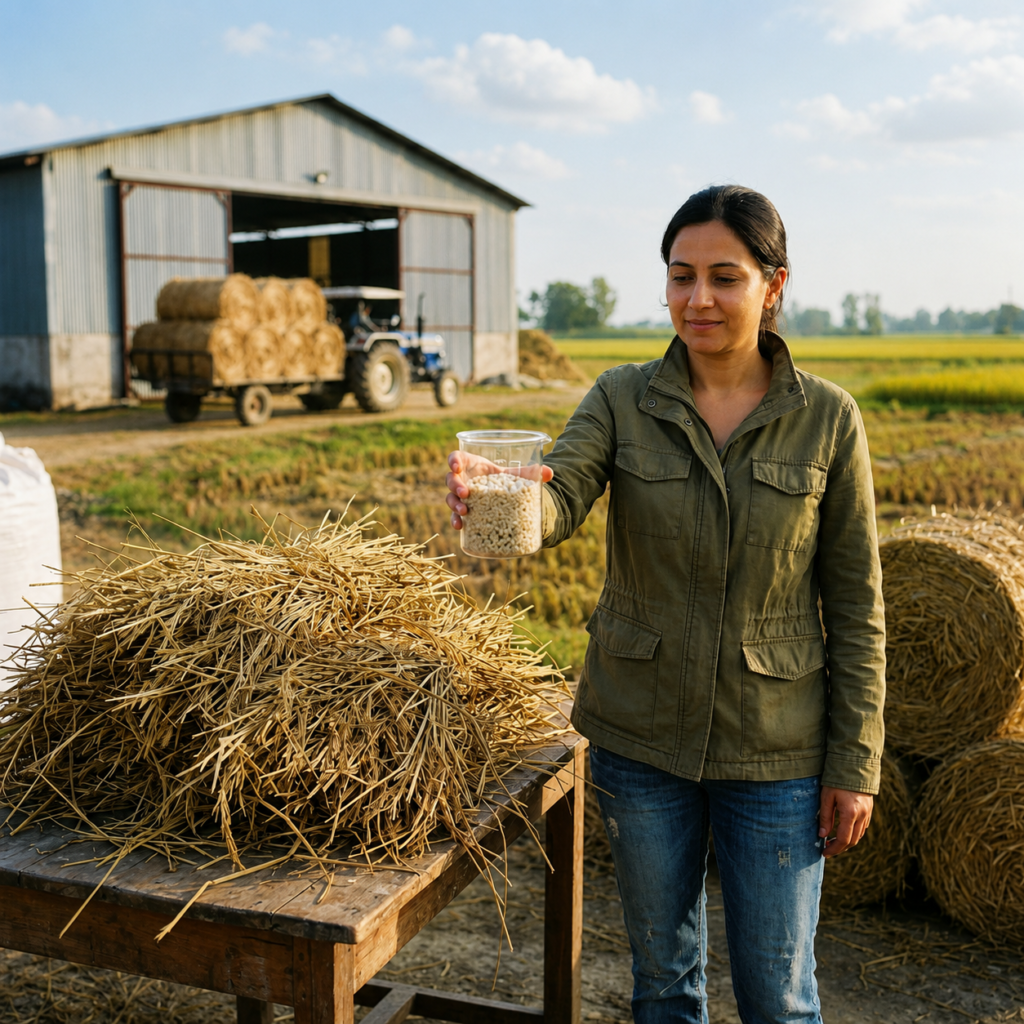
producing bio-based polyethylene takes roughly 6 kilograms of corn per kilogram
of polymer, nearly three times the biomass PLA needs, and land occupation alone
accounts for around 60% of the total impact for corn-based PLA and
sugarcane-based PHB (Erradhouani et al., 2026). None of that shows up on
a bag that simply says “plant-based.”
Where Regulators Are Stepping In
The EU’s Directive on Empowering Consumers for the Green
Transition has been binding law since March 2024, and its rules become
enforceable across all 27 member states on 27 September 2026. From that date,
generic claims like “sustainable,” “eco-friendly,” or “green” are prohibited
unless they’re specific and substantiated, and companies can no longer rely on
self-created sustainability labels unless those labels sit on an independent,
third-party certification scheme. Penalties can reach 4% of a company’s annual
turnover in the relevant member state (European Commission, 2026).
Courts aren’t waiting for the deadline. In March 2025, a
regional court in Cologne ruled against Lufthansa’s “Green Fares” marketing,
finding that customers were misled about how much of their flight’s emissions
were actually offset through sustainable aviation fuel and climate projects (Business
& Human Rights Resource Centre, 2025). By November 2025, the European
Commission had secured a pledge from 21 European airlines, Lufthansa included,
to stop implying that a flight’s emissions can be neutralised through offsets
or fuel purchases and to substantiate any claim about future environmental
performance (Courthouse News Service, 2025). Airlines aren’t the target
audience here. The pattern is: unsubstantiated feel-good language is what’s
getting struck down, and a “plant-based” claim standing in for “sustainable” is
built from the same material.
A bio-based claim confirms only that a portion of the carbon
in a product originates from renewable biological sources, as verified using
standards such as ASTM D6866. It also indicates a reduced dependence on
fossil-derived carbon. However, such a claim does not provide information about
the product’s overall greenhouse gas emissions, the land-use or biodiversity
impacts associated with cultivating the feedstock, water consumption during
cultivation and processing, or whether the material is biodegradable at the end
of its life. Therefore, a bio-based label alone should not be interpreted as
evidence of overall environmental sustainability.
With the introduction of new European Union regulations from
September 2026, environmental claims will be evaluated based on robust
scientific evidence rather than broad or unsubstantiated statements. Before
making claims such as “sustainable” or “bio-based,”
businesses should ensure that these claims do not rely solely on the renewable
origin of the carbon without considering broader environmental impacts such as
land use, water use, and total greenhouse gas emissions. Generic terms like
“eco-friendly” or “sustainable” should always be supported
by specific, measurable, and verifiable metrics, as these are among the primary
targets of regulatory scrutiny. Furthermore, environmental claims should be
supported by independent third-party certifications rather than self-created
labels, and any future sustainability commitments should include a publicly
available, time-bound implementation plan that is independently verified. These
measures help ensure compliance with evolving regulations while improving the
credibility and transparency of environmental claims.
Frequently Asked Questions
Does “bio-based” mean a product is environmentally
sustainable overall?
Not necessarily. A 2026 Nature Communications study found
that bio-based plastics lower greenhouse gas emissions but increase ecosystem
damage, mainly through land use, when compared across their full life cycle
against fossil-based plastics (Erradhouani et al., 2026).
How much land and water would switching to bio-based
plastics actually require?
A 2020 analysis in One Earth estimated that replacing all of
Europe’s petrochemical plastic packaging with bioplastic would need about 7.4
million hectares of land, larger than Ireland, and at least 45 billion cubic
meters of water, roughly a fifth of the EU’s total freshwater use (Brizga et
al., 2020).
What is the EU doing to regulate claims like
“sustainable” or “eco-friendly”?
The Directive on Empowering Consumers for the Green
Transition, binding since March 2024, becomes enforceable on 27 September 2026.
It bans generic, unsubstantiated environmental claims and self-created
sustainability labels, with penalties of up to 4% of annual turnover (European
Commission, 2026).
Has a company already been penalized for a
“sustainable”-type claim?
Yes. A Cologne regional court ruled against Lufthansa’s
“Green Fares” offset marketing in March 2025 for misleading customers (Business
& Human Rights Resource Centre, 2025), and by November 2025 the European
Commission had secured commitments from 21 European airlines to drop similar
unsubstantiated claims (Courthouse News Service, 2025).
References
Brizga, J., Hubacek, K., & Feng, K. (2020). The
unintended side effects of bioplastics: Carbon, land, and water footprints. One
Earth, 3(1), 45–53. https://doi.org/10.1016/j.oneear.2020.06.016
Business & Human Rights Resource Centre. (2025).
Germany: NGO wins greenwashing lawsuits against Lufthansa and Adidas over
misleading sustainability claims. https://www.business-humanrights.org/en/latest-news/germany-ngo-wins-greenwashing-lawsuits-against-lufthansa-and-adidas-over-misleading-sustainability-claims/
Courthouse News Service. (2025, November 7). EU airlines
agree to drop misleading climate claims. https://www.courthousenews.com/eu-airlines-agree-to-drop-misleading-climate-claims/
Erradhouani, B., Coma, V., Sonnemann, G., & Loubet, P.
(2026). Transition to bio-based plastic packaging reveals complex
climate–biodiversity trade-offs. Nature Communications, 17(1), 1–12. https://doi.org/10.1038/s41467-026-69016-9
European Commission. (2026). Frequently asked questions:
Directive on Empowering Consumers for the Green Transition. https://commission.europa.eu/document/download/3c257883-bb2a-4dd9-a6dc-501d587bb34f_en?filename=faq-empowerting-consumers-gtd.pdf