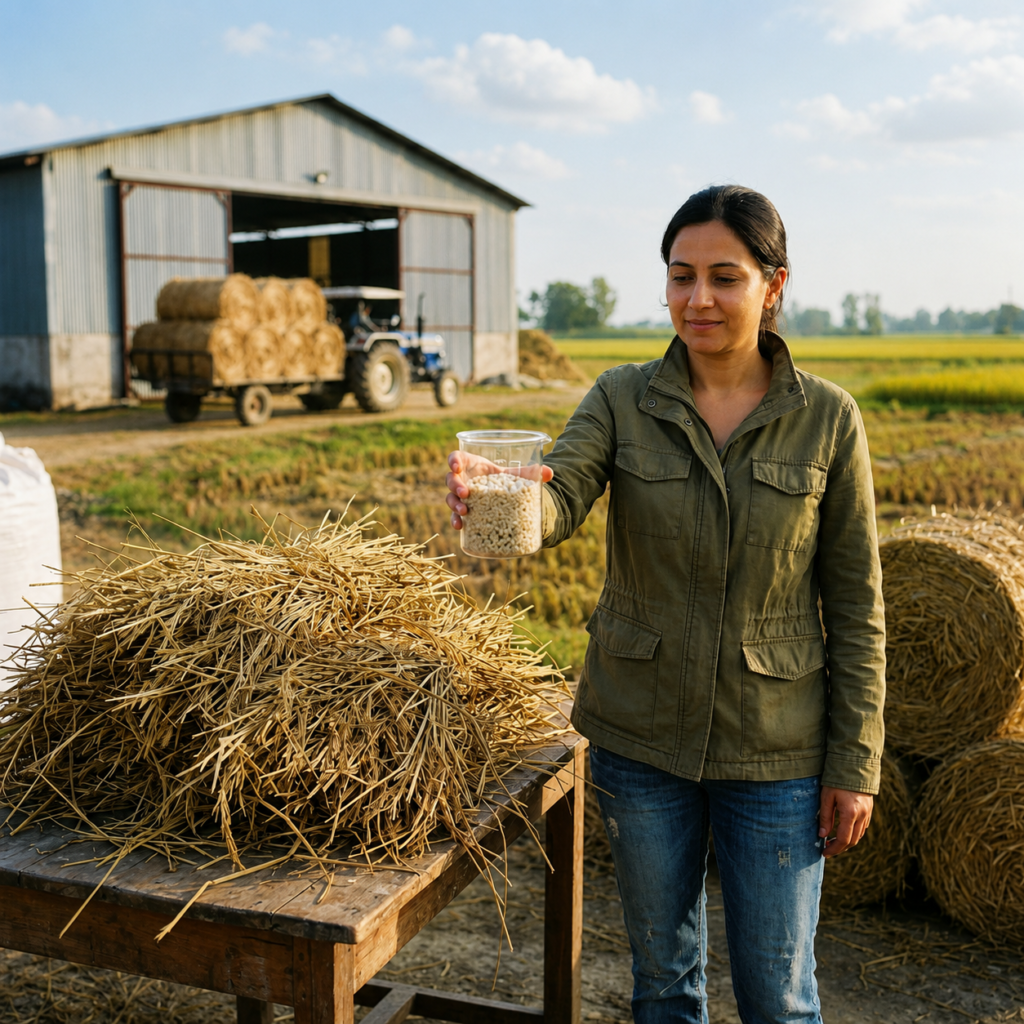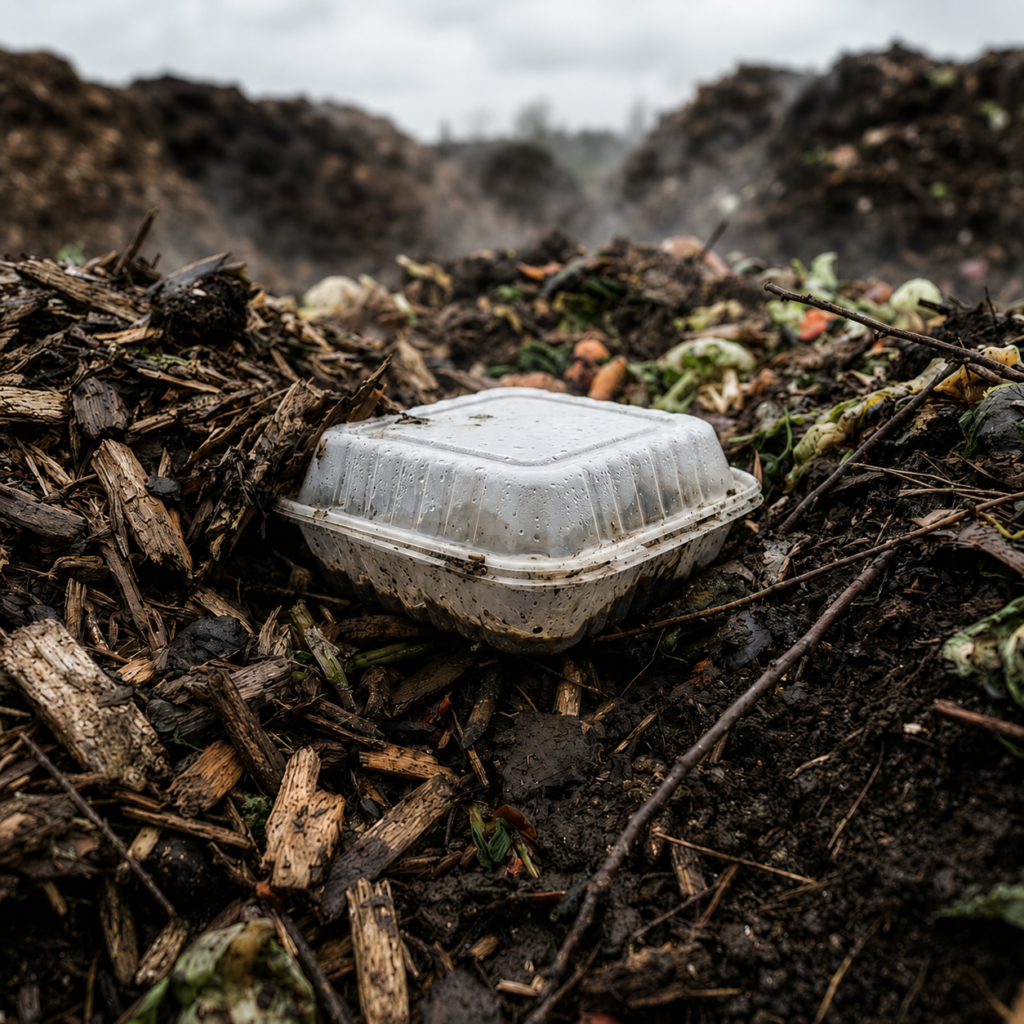
Braskem’s bio-based polyethylene is made from Brazilian sugarcane, not a drop of crude oil in it, and it will sit in a landfill for centuries without breaking down (FKuR, n.d.). PBAT, meanwhile, is synthesized entirely from petroleum, and it fully biodegrades into water, CO2, and biomass under composting conditions (Burford et al., 2023). One is plant-based and permanent. The other is fossil-based and disappears. That’s close to the opposite of what most people assume when they see “plant-based” printed on a package.
Two Separate Questions, Sold as One
“Plant-based” or “bio-based” answers where the carbon in a plastic came from: a sugarcane field, corn starch, or a well. “Biodegradable” answers something entirely different: what happens to that plastic’s molecular structure once microbes get access to it. A polymer’s fate comes down to its chemical backbone. Ester bonds, the kind found in PLA and PBAT, break apart through hydrolysis, which is exactly the chemistry that lets composting microbes consume the material in nearly any environment (Burford et al., 2023). A carbon-carbon backbone, the kind in polyethylene, doesn’t have that weak point, whether the carbon started out in a plant or in oil.
The Sugarcane Plastic That Won’t Compost
Braskem’s I’m Green bio-based polyethylene, first commercialized in 2010, is produced from Brazilian sugarcane ethanol instead of petroleum, and it’s molecularly identical to conventional polyethylene (FKuR, n.d.). Identical structure means identical fate: it behaves like ordinary PE at end of life, which is why it’s designed for existing plastic recycling streams rather than a compost bin. One industry analysis put the confusion plainly, noting that the “bio” prefix in bio-PE has likely been misread by some stakeholders as a promise of biodegradability, when the company only ever meant biobased sourcing (Renewable Carbon News, 2015).
The Petroleum Plastic That Composts
PBAT runs the comparison in reverse. It’s built from adipic acid, butanediol, and terephthalic acid, three petroleum-derived building blocks with no plant content at all, and it’s classified as a synthetic, 100% biodegradable polymer (Burford et al., 2023). It’s often blended into PLA-based compostable bags and foodservice ware specifically because it supplies flexibility that pure plant-based PLA lacks on its own. Two materials sharing one bag, and only one of them ever touched a plant.
Where the Confusion Becomes a Legal Problem
The FTC’s Green Guides address this directly. An unqualified claim about renewable material can imply, without the marketer ever stating it, that a product is recyclable, made with recycled content, or biodegradable, so marketers are told to qualify such claims unless the product is made entirely, or virtually entirely, of renewable material (Federal Trade Commission, 2012). Regulators already recognize that “plant-based” quietly borrows credibility from “biodegradable”, even on packaging where the word biodegradable never actually appears.
Polymer | Feedstock | Biodegradable? |
PLA | Plant-based (corn, sugarcane) | Yes |
PHA | Plant-based / microbial fermentation | Yes |
Bio-PE | Plant-based (sugarcane) | No |
PBAT | Petroleum | Yes |
Conventional PE / PET | Petroleum | No |
Global bio-based plastics production is projected to roughly double by 2030, and as of 2025, non-biodegradable bio-based plastics such as bio-PE already account for 58% of that global output, more than the biodegradable share (Packaging World, 2025). The confusion is most of the market.
Before You Assume ‘Plant-Based’ Means It Breaks Down
Check which one the label is actually making:
- Does the label say “biodegradable” or “compostable” anywhere, or only “plant-based,” “bio-based,” or “made from renewable materials”?
- If it only claims plant origin, does it separately state how to dispose of it, recycle bin or compost bin?
- Is there a compostability standard number attached (D6400, EN 13432, IS/ISO 17088), separate from any bio-based content certification like ASTM D6866?
- Would a fossil-based version of the same polymer behave differently at end of life? If the honest answer is no, the feedstock isn’t what decides its fate.
Frequently Asked Questions
If a plastic is made from plants, doesn’t that mean it will decompose?
Not necessarily. Braskem’s sugarcane-based polyethylene is chemically identical to fossil-based polyethylene and is not biodegradable; it’s designed to be recycled through ordinary plastic streams instead (FKuR, n.d.).
Can a plastic made from petroleum be biodegradable?
Yes. PBAT is synthesized entirely from petroleum-derived building blocks and is classified as a synthetic, 100% biodegradable polymer, thanks to ester bonds in its structure that break down through hydrolysis (Burford et al., 2023).
What’s the actual difference between “bio-based,” “biodegradable,” and “compostable”?
Bio-based describes what a material is made from and is verified separately, for instance through ASTM D6866 bio-based content testing. Biodegradable describes whether microbes can break down its molecular structure at all. Compostable is a certified, time-bound version of biodegradable under specific conditions, tested against standards like ASTM D6400. None of the three confirms the other two (Federal Trade Commission, 2012).
How common are non-biodegradable “bio-based” plastics on the market today?
More common than the biodegradable kind. As of 2025, non-biodegradable bio-based plastics account for 58% of global bio-based plastic production, against 42% for biodegradable types like PLA (Packaging World, 2025).
References
Burford, T., Rieg, W., & Madbouly, S. (2023). Biodegradable poly(butylene adipate-co-terephthalate) (PBAT). Physical Sciences Reviews, 8(8), 1127–1156. https://doi.org/10.1515/psr-2020-0078
Federal Trade Commission. (2012). Guides for the use of environmental marketing claims, 16 C.F.R. Part 260. https://www.ftc.gov/sites/default/files/attachments/press-releases/ftc-issues-revised-green-guides/greenguides.pdf
FKuR. (n.d.). What does the Braskem logo “I’m green™ bio-based” mean? https://fkur.com/en/faq/what-is-im-green-bio-based-renewable-polyethylene/
Packaging World. (2025, December 4). Bioplastics to double by 2030; packaging leads market. https://www.packworld.com/sustainable-packaging/bio-based/article/22956133/bioplastics-to-double-by-2030-packaging-leads-market
Renewable Carbon News. (2015, March 2). Recycling of biobased polyethylene. https://renewable-carbon.eu/news/recycling-of-biobased-polyethylene/