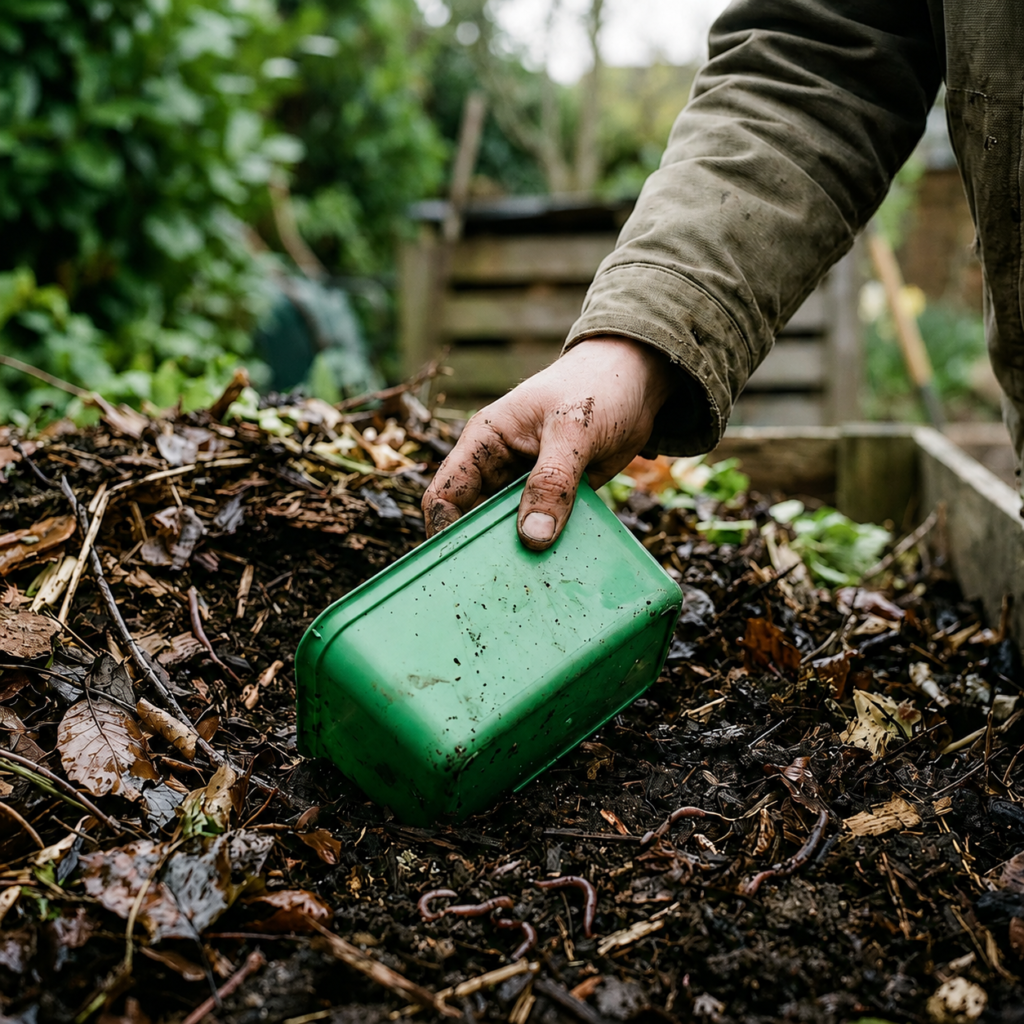
In 2024, engineers ran the same certified compostable
packaging through two settings, a controlled lab test and a real industrial
composting plant, over the identical three-week span. In the lab, the sample
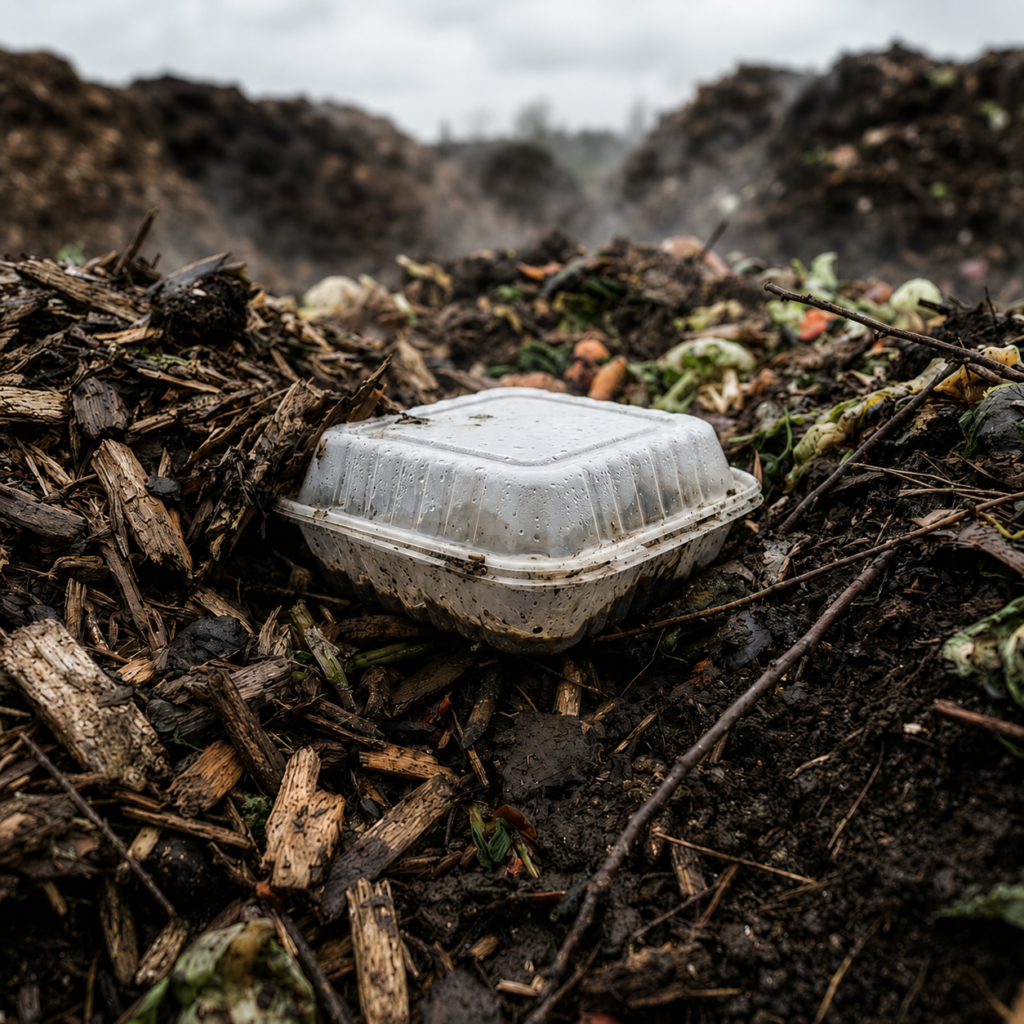
lost most of its mass, down to 68.9% remaining. In the actual plant, 98.3% of
it was still there (Chong et al., 2024). Same material, same
certification behind it, same three weeks. Two very different outcomes. So, the
gap is about that not whether a product is tested, but whether the place it’s
supposed to end up actually behaves the way the test assumed.
A Passed Lab Test Isn’t a Promise
Certification tests like ISO 20200 run under tightly
controlled conditions including steady moisture, steady turning, steady heat.
Real composting plants juggle mixed feedstock, uneven turning schedules, and
retention times set by throughput, not by what a specific plastic blend needs.
The 2024 study above found that certified rigid packaging held together far
better in the working plant than in the lab replicating the same duration (Chong
et al., 2024). The certificate on the package describes a laboratory
result. It doesn’t describe the facility that will actually receive it, if one
receives it at all.
|
Same Rigid Packaging Sample |
Mass Remaining After 3 Weeks |
|
Controlled lab-scale test (ISO 20200) |
68.9% remaining |
|
Actual industrial composting plant |
98.3% remaining |
As of 2025, 35.9% of the sampled US population has access to
some composting program, up from 27% in 2020 (Sustainable Packaging
Coalition, 2025). That’s overall access, and it includes programs that take
food scraps only. A few years earlier, the Sustainable Packaging Coalition
estimated that just 15% of composting facilities nationally accepted packaging
at all, and only about 11% of American households could route compostable
packaging to one (Resource Recycling, 2023). Facility numbers have grown
since, but slowly, and unevenly by material.
A 2023 survey of full-scale food waste composters found that
71% now accept some form of compostable packaging, up from 58% in 2018 (Waste
Dive, 2023). But that’s a share of roughly 230 facilities nationwide, and
acceptance splits by material: molded fiber containers were taken by just under
half the facilities surveyed, bioplastic-coated paper by only 31%.
A product built for composting can be certified
correctly and still have no local facility willing to take it.
In January 2026, the USDA’s National Organic Standards Board
voted unanimously against adding synthetic compostable materials to the list of
substances allowed as feedstock in certified organic compost (Rachal, 2026).
The board’s concern wasn’t whether the material could theoretically break down.
It was that compostable plastics look identical to ordinary plastic on a
sorting line, which means contamination is close to guaranteed at scale, along
with worries over PFAS content and inconsistent breakdown once the material is
actually in a working pile. Composters interviewed for the decision said they
mostly accept compostable foodservice items for the food scraps attached to
them, not for the packaging itself, and many now screen the packaging out
entirely rather than risk the batch.
In India, only about a quarter of the country’s more than
4,000 waste-processing plants currently run at full capacity, and roughly half
of the estimated 160,038 tonnes of solid waste generated daily nationwide
actually gets treated at all (Clean India Journal, 2024). A carry bag
certified against IS/ISO 17088 has cleared a real, government-recognized lab
test. But certification confirms what happens under controlled conditions, not
what happens once the bag reaches a system where segregation at source is
inconsistent and treatment capacity runs well under half of what’s generated.
Without that connecting infrastructure, the bag’s most likely path is the same
landfill or open dump as everything else.
QUESTIONS THE LAB TEST DOESN’T ANSWER
A certificate tells you what happened in a lab. It doesn’t
tell you what happens after you throw the product away. Ask this instead.
·
Is there an industrial facility that actually
accepts this material?
·
Do the local waste system separate compostables
at all, or does everything, sorted bin or not, ride the same truck to the same
landfill?
·
Does the facility run this material long enough
to matter, or only for the shorter window a real composting cycle allows,
versus the 12 weeks a lab test gets?
·
Is the honest answer to “what happens after I
throw this away” “it gets screened out and landfilled,” rather than “it gets
composted”?
Frequently Asked Questions
If a product passes ASTM D6400 or EN 13432, will it
definitely compost in a real facility?
Not necessarily. The 2024 study comparing lab-scale
composting with an actual industrial plant found a certified rigid packaging
sample retained 98.3% of its mass after three weeks in the real facility,
versus 68.9% remaining under a matched lab-scale test over the same period
(Chong et al., 2024). Passing the standard confirms lab behavior, not plant
behavior.
How many people actually have access to composting that
accepts packaging, not just food scraps?
As of 2025, 35.9% of the sampled US population has access to
some composting program, up from 27% in 2020 (Sustainable Packaging Coalition,
2025). That figure includes food-waste-only programs; a few years earlier, only
about 15% of composting facilities nationally accepted packaging specifically,
and roughly 11% of households could route it there (Resource Recycling, 2023).
Why did the USDA’s organic standards board vote against
compostable packaging?
In January 2026, the National Organic Standards Board voted
unanimously against adding synthetic compostable materials to the list of
allowed organic compost feedstocks, citing contamination risk from look-alike
plastics, potential PFAS content, and inconsistent breakdown under real
composting conditions (Rachal, 2026).
References
Chong, Z. K., Hofmann, A., Haye, M., Wilson, S., Sohoo, I.,
Alassali, A., Kuchta, K., Karamanlioglu, M., & Hayes, D. G. (2024).
Lab-scale and full-scale industrial composting of biodegradable plastic blends
for packaging. Open Research Europe, 2, Article 101. https://doi.org/10.12688/openreseurope.14893.3
Clean India Journal. (2024, November 26). India to generate
0.7kg waste per person per day by 2025: Report. https://cleanindiajournal.com/india-to-generate-0-7kgwaste-per-person-per-day-by-2025-report/
Rachal, M. (2026, January 14). USDA organics board rejects
compostable polymers, puts paper on watch. Packaging Dive. https://www.packagingdive.com/news/national-organic-standards-board-votes-against-compostable-materials-national-list/809526/
Resource Recycling. (2023, January). A compostable future. https://resource-recycling.com/recycling/2023/03/01/a-compostable-future/
Sustainable Packaging Coalition. (2025, October 1). New SPC
research shows U.S. increase in composting access. https://sustainablepackaging.org/2025/10/01/new-composting-access-data/
Waste Dive. (2023, August 7). Survey finds more composters
are accepting food waste, but challenges remain. https://www.wastedive.com/news/biocycle-2023-composting-survey-closed-loop/689945/