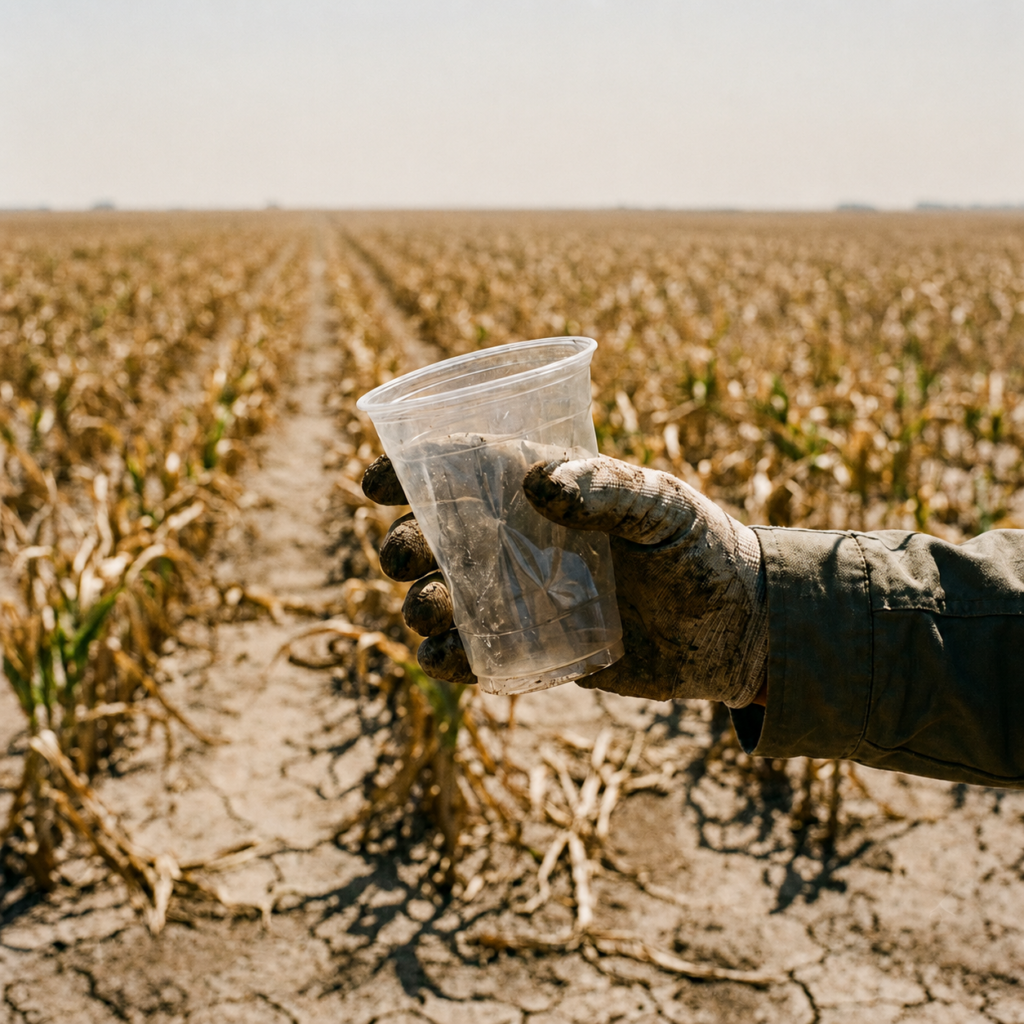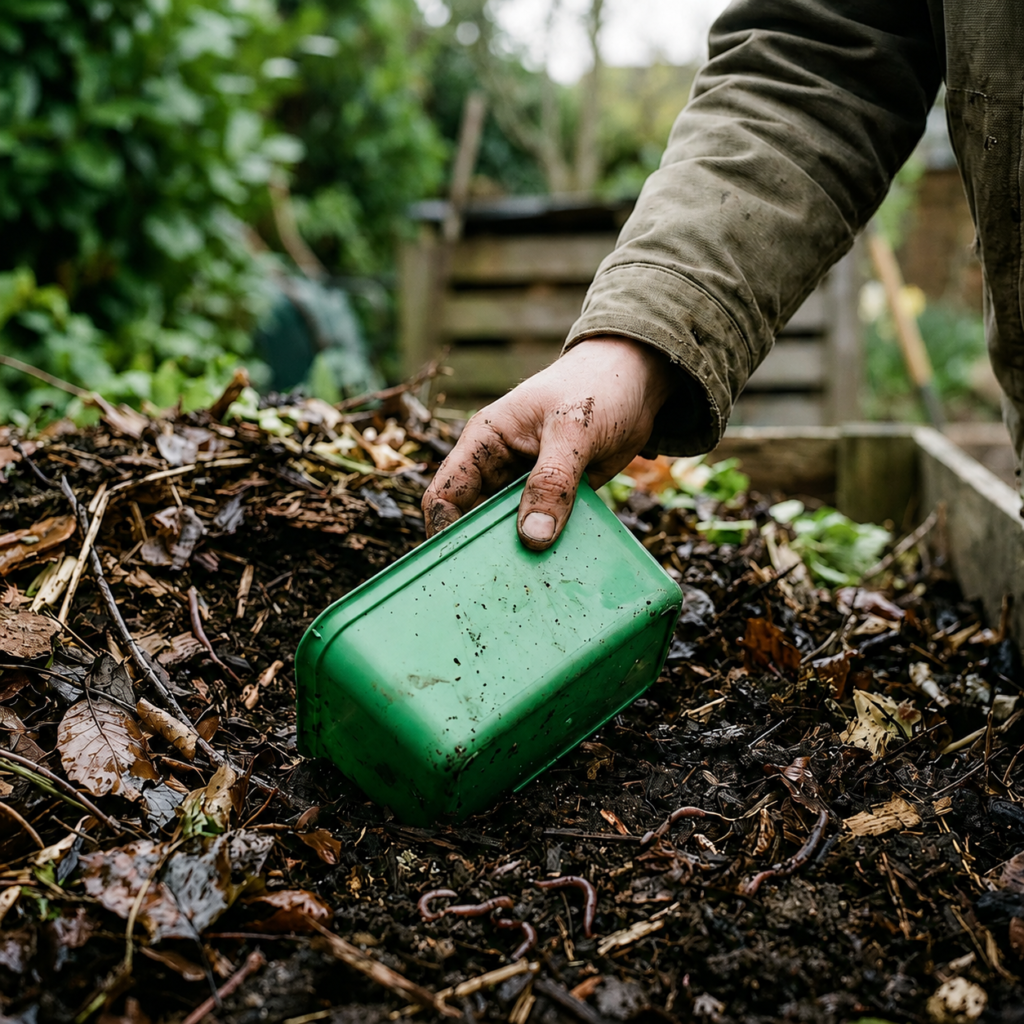
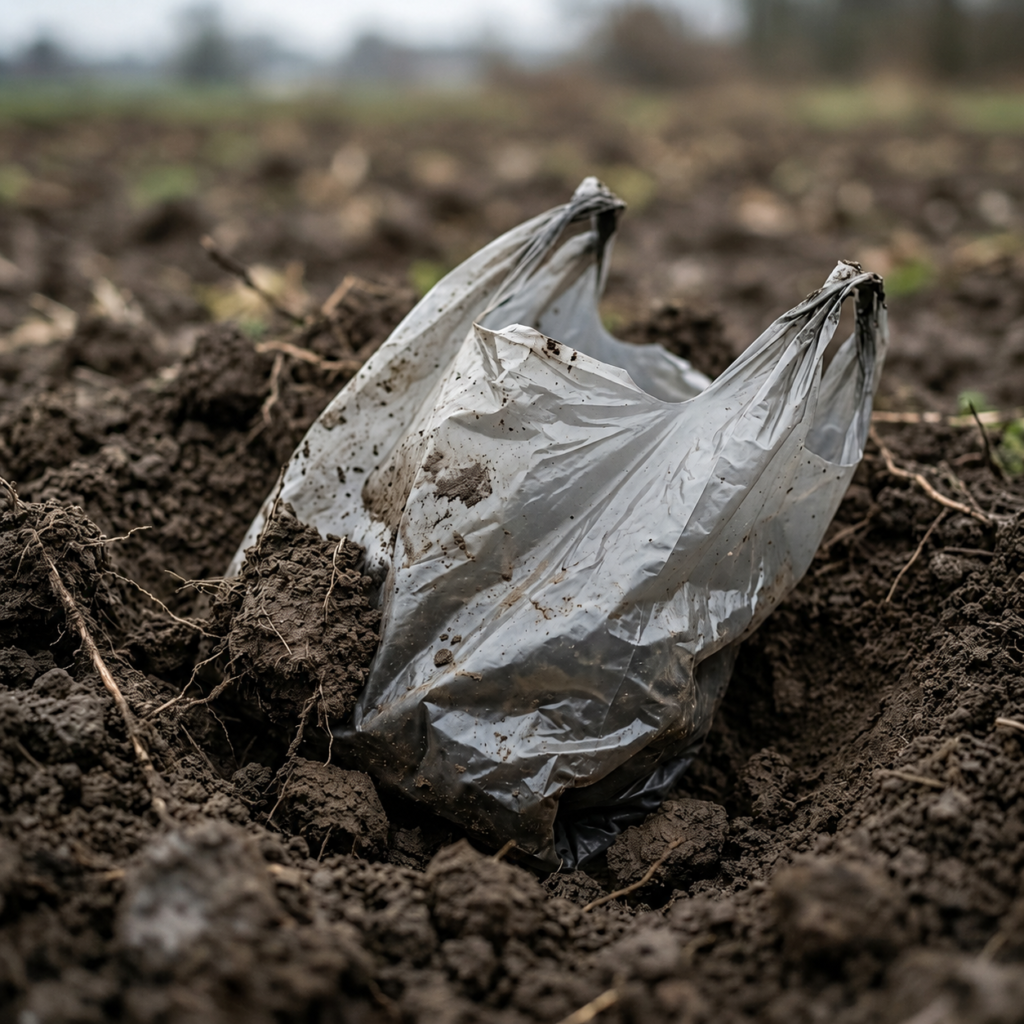
In 2015, marine scientists at the University of Plymouth buried five kinds of plastic carrier bags in soil, submerged some in seawater, and left others exposed outdoors. Three years later, they dug them up. The bag labeled “biodegradable” was still strong enough to carry a full load of groceries (Napper & Thompson, 2019).
So, the gap between the word printed on a package and what actually happens to it, is the whole story here. And there’s a real, documented test that separates one from the other.
The Word That Means Almost Nothing on Its Own
Technically, everything biodegrades. Glass will do it in roughly a million years, a plastic bottle in several hundred, a cotton shirt in a few months. That’s the loophole every unqualified “biodegradable” label quietly leans on is that the word by itself carries no deadline and no disposal environment.
The US Federal Trade Commission closed part of that loophole in its Green Guides. An unqualified biodegradable claim needs evidence that the entire product breaks down within a “reasonably short period of time” after normal disposal, which the FTC defines as one year (Federal Trade Commission, 2012). Landfills, incinerators, and recycling facilities, the guidance adds, won’t let anything degrade within a year, so an unqualified biodegradable claim shouldn’t be made on items headed there at all (Federal Trade Commission, 2012). Most packaging is headed exactly there.
Two Studies, One Pattern
Napper and Thompson conducted tests on conventional, biodegradable, oxo-biodegradable, and compostable carrier bags in soil, seawater, and the open atmosphere for three years. The biodegradable and oxo-biodegradable bags that were removed from the soil and the seawater retained their strength to be capable of carrying shopping items. However, the compostable bag disintegrated in the sea in three months but still remained visible when buried in 27 months (Napper & Thompson, 2019). Same tag, three distinct results based on location.
Another independent study by the Scripps Institution of Oceanography used polylactic acid (PLA), which is the plant-based material that makes up most “compostable” forks and cups, in natural seawater from a pier in California. After 428 days, there was zero evidence of chemical changes to the PLA using Raman spectroscopy, whereas a sample of cellulose decomposed completely in 35 days (Royer et al., 2023). The scientists said that labeling compostable plastics as biodegradable is deceptive because it is supposed to break down only in industrial facilities and not in the environment.
What an Actual Test Looks Like
A real biodegradability test isn’t a slogan, it’s a lab protocol with pass-or-fail numbers attached. The US standard (ASTM D6400), the European standard (EN 13432), and India’s standard (IS/ISO 17088) all check for close to the same four things before a product can legitimately carry a compostable claim (Plastics Industry Association, n.d.):
Criterion | What It Requires |
Biodegradation | At least 90% of the material’s organic carbon converts to CO2 within 180 days under industrial composting conditions |
Disintegration | No more than 10% of the original mass remains on a 2mm sieve after 12 weeks of composting |
Ecotoxicity | The resulting compost supports normal plant growth and shows no toxic residue |
Heavy metals | Concentrations of regulated metals stay below set thresholds |
Industrial composting runs at 55–60°C for weeks at a stretch. A home compost bin rarely reaches that, which is exactly why packaging that passes ASTM D6400 can still sit intact in a backyard pile for years.
A word printed on a box proves nothing by itself; a certificate number does. In the US, BPI certifies products to ASTM D6400. In Europe, TUV Austria’s OK compost mark is based on EN 13432. In India, the Central Pollution Control Board issues a certificate only after a CPCB-recognized lab tests the product against IS/ISO 17088, and every certified bag carries a code linking it back to that test report and the manufacturer’s registration (Central Pollution Control Board, n.d.). If a package can’t point to one of these, the claim on it is unverified by definition.
Regulators Are Already Catching This
The FTC has already acted on the gap between claim and evidence. In 2013, it settled with AJM Packaging Corporation over biodegradability claims the company couldn’t substantiate, and stated clearly that ASTM D5511, a common lab method, cannot by itself support an unqualified biodegradable claim because it doesn’t represent how products are actually thrown away (Federal Trade Commission, 2013). Truth in Advertising has since tracked more than 150 greenwashing class-action lawsuits in the US, and 9% of them involve compostable or biodegradable claims specifically (Truth in Advertising, 2025).
Test This Yourself
Before you trust a claim on a package, or put one on your own, check it against these four questions.
- Does it name a standard?
D6400, EN 13432, or IS/ISO 17088. No standard named means no test behind it.
- Is there a certificate or registration number?
BPI, TÜV Austria, and CPCB all keep public, searchable registries.
- Does it state where and how long?
“Compostable” without “industrial facility, 180 days” is an incomplete claim.
- Is it oxo-degradable?
That’s a separate, additive-based process that fragments plastic into microplastics rather than converting it to CO2, and it’s banned or restricted in several markets, including under India’s Plastic Waste Management Rules.
Frequently Asked Questions
What’s the real difference between “biodegradable” and “compostable”?
Biodegradable is a non-specific term without any timeframe. Virtually everything biodegrades, provided enough time is given. On the other hand, “compostable” is something that can be tested and certified. The definition of “compostable” material is one that completely degrades to carbon dioxide in 180 days and disintegrates in less than 12 weeks (Plastics Industry Association).
Will a “biodegradable” bag actually break down in the ocean or my backyard?
According to the existing literature, usually not. Bags identified as biodegradable that were buried in soil or left submerged in water for more than three years were still intact and able to transport shopping bags (Napper & Thompson, 2019), and PLA did not degrade even after 428 days in seawater (Royer et al., 2023).
How do I check if a compostable certification is real?
Search for the certificate or registration number directly on the certifying body’s public database like BPI in the US, TUV Austria in Europe, or the CPCB list of certified manufacturers in India (Central Pollution Control Board). A logo alone, without a searchable number attached, doesn’t confirm anything.
Is “bio-based” the same as biodegradable?
No, it does not. Bio-based refers to the type of materials that make up the product, such as sugarcane or corn starch. Biodegradable and compostable refer to how the product breaks down when its useful lifetime ends. For example, Bio-PE is made from sugarcane, but it acts just like polyethylene.
References
Central Pollution Control Board. (n.d.). Standard operating procedure for issuing certificate to compostable plastic manufacturers/sellers. Ministry of Environment, Forest and Climate Change. https://cpcb.nic.in/openpdffile.php?id=TGF0ZXN0RmlsZS9fMTU5OTcyMjUyNV9tZWRpYXBob3RvNjgzNi5wZGY=
Federal Trade Commission. (2012). Guides for the use of environmental marketing claims, 16 C.F.R. Part 260. https://www.ftc.gov/sites/default/files/attachments/press-releases/ftc-issues-revised-green-guides/greenguides.pdf
Federal Trade Commission. (2013, October 1). FTC cracks down on misleading and unsubstantiated environmental marketing claims [Press release]. https://www.ftc.gov/news-events/news/press-releases/2013/10/ftc-cracks-down-misleading-unsubstantiated-environmental-marketing-claims
Napper, I. E., & Thompson, R. C. (2019). Environmental deterioration of biodegradable, oxo-biodegradable, compostable, and conventional plastic carrier bags in the sea, soil, and open-air over a 3-year period. Environmental Science & Technology, 53(9), 4775–4783. https://doi.org/10.1021/acs.est.8b06984
Plastics Industry Association. (n.d.). Industrial compostability claims checklist. https://plasticsindustry.org/wp-content/uploads/2022/11/Industrial-Compostability-Claims-Checklist.pdf
Royer, S.-J., Greco, F., Kogler, M., & Deheyn, D. D. (2023). Not so biodegradable: Polylactic acid and cellulose/plastic blend textiles lack fast biodegradation in marine waters. PLOS ONE, 18(5), Article e0284681. https://doi.org/10.1371/journal.pone.0284681
Truth in Advertising. (2025, March). By the numbers: Greenwashing class-action lawsuits. https://truthinadvertising.org/articles/by-the-numbers-greenwashing-class-action-lawsuits/