Imagine a busy Saturday afternoon at your regular go-to café. You order an iced coffee in a clear cup, get a wooden stir stick, and walk out the door carrying your drink in a bag that feels like paper but isn’t. It’s made from sugarcane pulp and is designed to break down in a compost bin within 90 days. Just one year ago, that same order would have resulted in a cocktail of plastics that would outlast your grandchildren.
This is not an experimental initiative. It’s a complete industry-wide transformation, and the numbers are mind-boggling:
$85.4B: Global compostable packaging market in 2025
8.4%: Projected CAGR through 2035
$252B: Forecasted market value by 2035
Plastic has long been presumed to be the standard material used in the manufacture of food and drink products and packaging materials. This assumption has been based on the fact that plastic is inexpensive, lightweight, and can easily be moulded to virtually any shape. Very few people actually thought about where their product might ultimately end up after they threw it in the rubbish bin, however, once the media began reporting more on plastics in the oceans, the issue of municipal landfill usage became just as problematic. As a result, consumer demands for change to the way in which their products were packaged quickly increased.
Both government agencies and consumers alike began to become aware of the need to change packaging and manufacturing processes. The EU implemented the Single-Use Plastics Directive, which recently expanded in 2024 to include additional types of packaging that will need to be recycled or composted. California’s SB 54 requires all packaging to be recyclable or compostable by 2032. The UK has a goal of making all plastic packaging reusable, recyclable, or compostable by 2025. All these legislative efforts are making “sustainability” the minimum requirement for brands competing in today’s marketplace.
“Packaging is approximately 40% of global plastic waste making it the single largest lever available for reduction.”
What’s actually replacing plastic?
The short answer for this question is a lot of things at once.
To summarize the above, many products have developed at an incredible rate lately. In fact, the research and development associated with compostable packaging materials has grown more in the past three years than it had over the prior twenty years combined.
Some examples of the materials and products described above include:
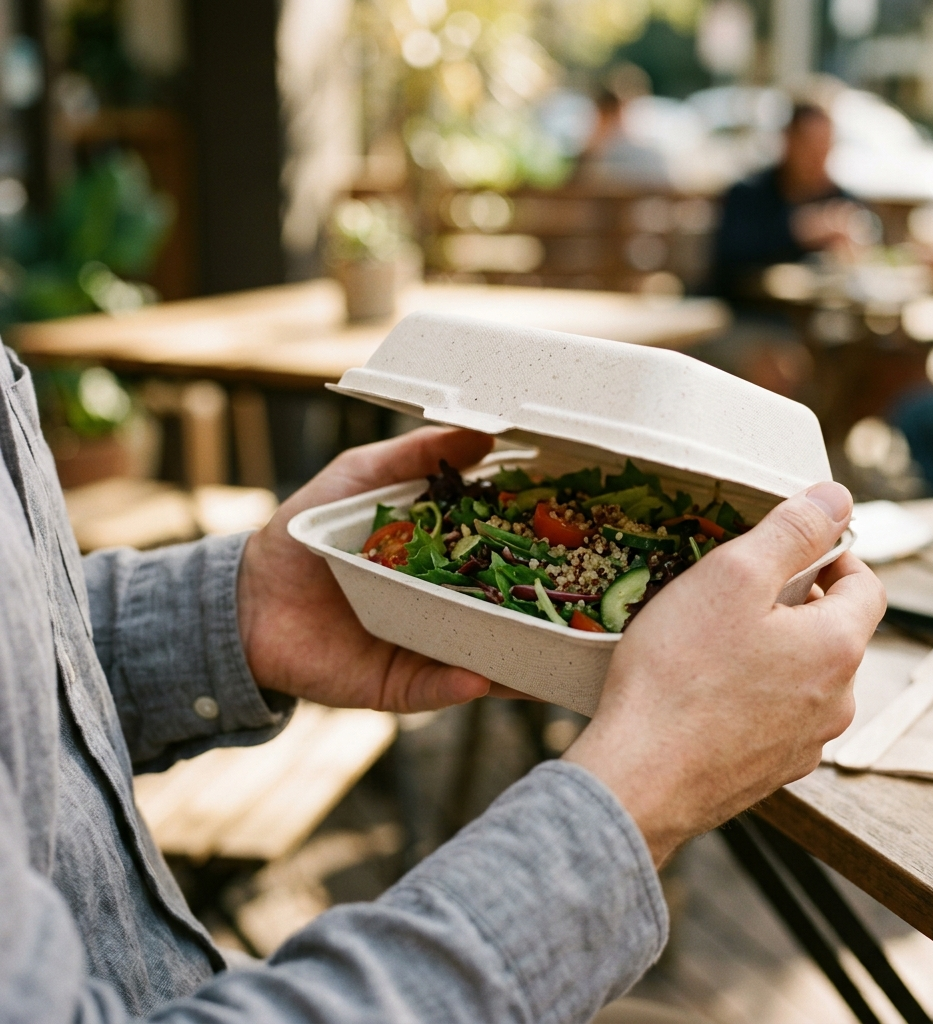
Bagasse, or the fibre remnant of sugar cane, has been used as the lining for a growing number of clamshells used at fast-food restaurants
PLA (polylactic acid) is what makes clear cups used for iced beverages
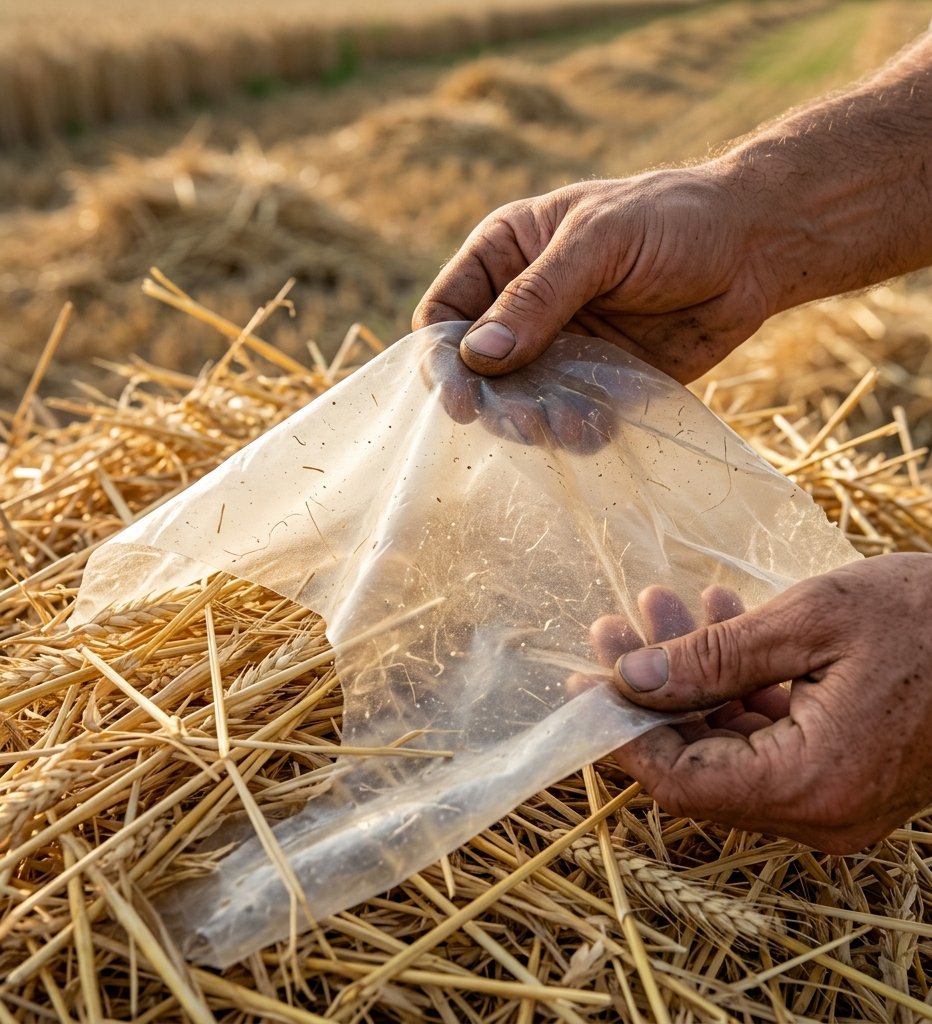
PHA (polyhydroxyalkanoate) bioplastics, to be manufactured by microorganisms, will be the next generation of alternatives.
For example, global bioplastics production is expected to increase dramatically over the next five years projected to rise from approximately 2.47 million metric tonnes in 2024 to more than 5.7 million metric tonnes by 2029.
In April 2024, Eastman and Sealed Air introduced a new certified compostable protein packaging tray made without PFAS and with about 50% of the weight of a comparable PET or polystyrene packaging item. They developed the tray specifically as an alternative to polystyrene foam. Also that month, Kari-Out Company introduced the first completely plant-based, certified compostable condiment packet for the food service industry. These two products were not concept pieces. They were shipped to food service establishments and used by consumers.
The brands making the loudest moves
McDonald has stated that they are now at 90% towards using 100% renewable, recycled or certified materials for their packaging by the end of use-by date, they have stated that they are now at 90%.
KFC Canada has committed to making sure that everything they produce for consumer consumption is compostable by 2025.
Nestle has also stated that they will reduce their use of virgin polymer to 1/3 less than what they use now, in addition, they have invested $30 million and are working with suppliers in the United States for recycled plastics.
The companies’ commitments are not just PR stunts; 35% of compostable food service packaging, which is the largest single group of users, has been driven by the bulk buying power of these chain restaurants and the pressure of the government to use compostable materials. Once McDonald’s has made this change in material for their supplier, every tier-2 and tier-3 sub-supplier will make that same change.
The consumer side of the equation
The reason this change will be permanent instead of temporary is that consumers are making decisions through their purchases. Research suggests that consumers are willing to pay a 20-25% markup for “green” packaging they can verify, despite tightened budgets due to inflation. Eco-friendly packaging has made its move away from an alternative option and into a signal of credibility for the brand. Brands that ignore this trend do not only lose customers who are committed to being environmentally-friendly, but they also diminish the general trust consumers have in the brand as a result of visibly making sustainable commitments.
“Modern consumers associate sustainable packaging with brand credibility. It’s no longer a feel-good extra, it’s a purchasing filter.”
The Unsolved Challenge
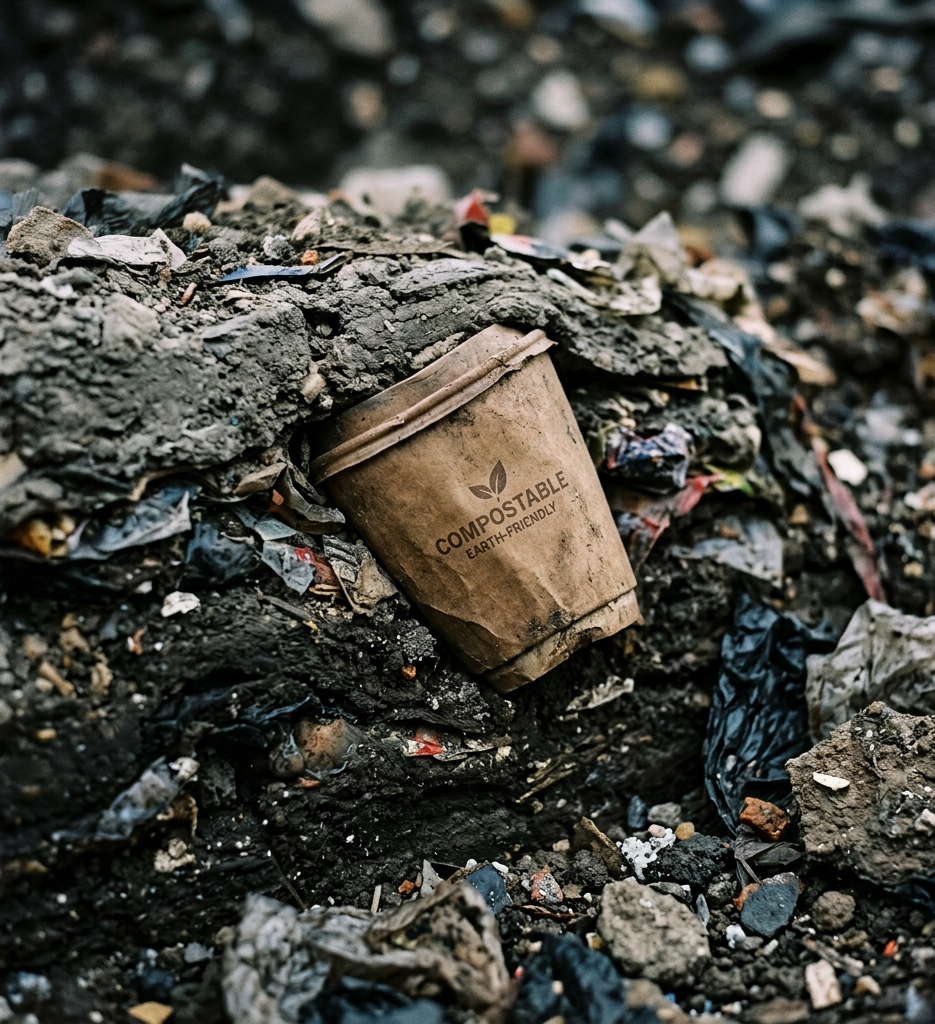
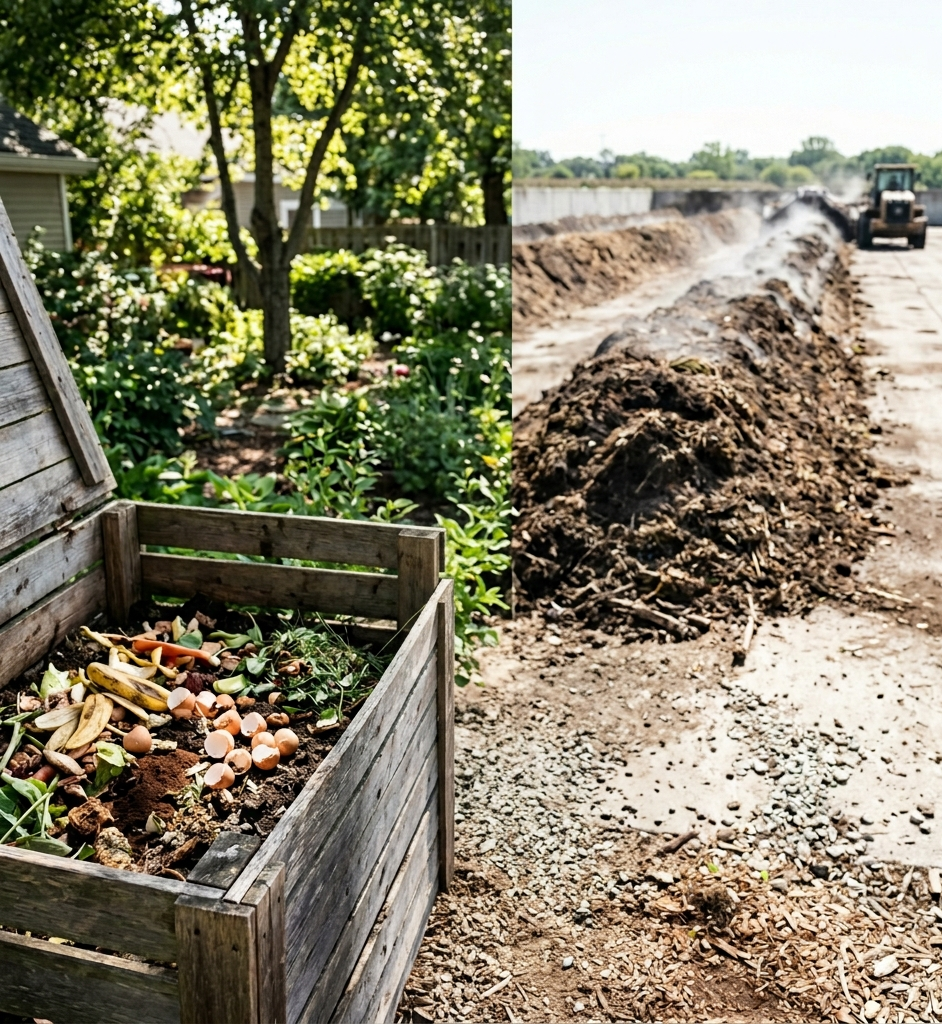
For compostable packaging to have an impact, it needs to be composted.
The current lack of proper infrastructure is a major barrier. In 2023, an estimated 6 million tonnes of compost were processed by composting facilities in the US, which is an increase of 840,000 tonnes compared with 2021. Therefore, while there has been steady growth, we are still far below the levels needed for widespread adoption of compostable packaging.
In developed countries, there has been about 15% growth per year in industrial organics composting plants, but access to these facilities is limited outside of major urban centres.
The current solution gaining traction with policymakers is Extended Producer Responsibility (EPR), which would implement frameworks for brands to be financially accountable for the entire life cycle of their packaging. According to the Closed Loop Centre’s Composting Consortium December 2025 report, EPRs that include compostable packaging could create a significant increase in both food waste diversion and investments in composting facilities at the same time.
Based on this report, it appears that EPR could provide a path to developing the types of infrastructure necessary to support the use of compostable packaging while simultaneously increasing both the amount of food waste being sent to composting facilities and the amount of money invested in composting facilities.
Where this goes next?
The growth in the compostable packaging sector appears to be gaining momentum, with projected figures moving from $85.4 billion in 2025 to approximately $152.96 billion by 2034, indicating a clear trend in the food and beverage industry being key players. This is evident through companies like Pakka Limited who recently raised $29.2m in funding to develop India’s first compostable flexible packaging factory that will start producing compostable bags by December 2025. There has also been some strong recent developments within Europe, where compostable packaging is increasingly becoming standardised as innovators develop certified home composting standards (TÜV Austria OK Compost Home) to give consumers reassurance that they are making quality purchases when looking for premium packaging options.
The switch from petroleum-based plastics to biodegradable/compostable materials should not be an event of ‘sacrifice’ by the way ‘the world can go green’. Instead, it is more of a redesign i.e., Communicating to the producer of a wrapper, somebody who serves drinks in a cup, a container, etc., what do you want to accomplish and designing a better product for the same function. If you received your (sugarcane) cup of coffee from a cafe yesterday, they did not do it to be trendy; they provided you with that product because the industry is now accepting that packaging is part of the actual product itself.
Frequently asked questions
Q) What’s the difference between biodegradable and compostable packaging?
If something is biodegradable, then it means it decomposes but it usually takes decades and produces toxic waste in the process. The main feature of compostable packaging is that it breaks down in a certain period of time (usually 90-180 days) under particular conditions, without leaving any traces other than water, CO2, and biomass. All compostable packaging is biodegradable, while the reverse is not necessarily true.
Q) Does compostable packaging cost more than regular plastic?
Yes, at present, although the difference keeps diminishing. This is because compostable products are generally more expensive on average, since the materials and their processing are more costly. Nevertheless, brands can benefit from buying products in bulk, and studies prove that customers are ready to pay an extra 20-25% for packaging considered environmentally friendly. With increased capacity of bioplastics production (expected to double by 2029), costs should drop significantly towards those of regular plastic.
Q) Can I compost these packages at home, or do they need an industrial facility?
It will depend on what sort of certification. Industrially compostable packing will need the hot temperatures offered by an industrial composter. “Home compostable” packing, on the other hand, is certified according to TUV Austria OK Compost Home and is capable of decomposing in a typical backyard compost bin. Be sure to check labels before anything else, because a lot of products that have PLA components cannot compost at home.
Q) Which food & beverage companies are leading this transition?
Some big-name players are leading the way. For instance, McDonald’s had more than 90% of its sustainable primary guest packaging ready in the year 2024. On its part, KFC Canada planned for all compostable packaging by 2025. The company Nestlé is striving for 100% recyclability or reuse of its packaging line backed by a $30 million US investment in recycled plastic.
Q) What regulations are driving this shift most forcefully?
Three noteworthy regulations include the Single-Use Plastics Directive of the European Union, revised in 2024, which bans various types of plastic packaging altogether; the requirement by SB 54 in California that by 2032 all packaging must be either recyclable or compostable and the UK’s commitment to having all plastic packaging being reusable, recyclable, or compostable by 2025. Finally, there is an increasing trend toward implementing extended producer responsibility (EPR) programs on both continents.