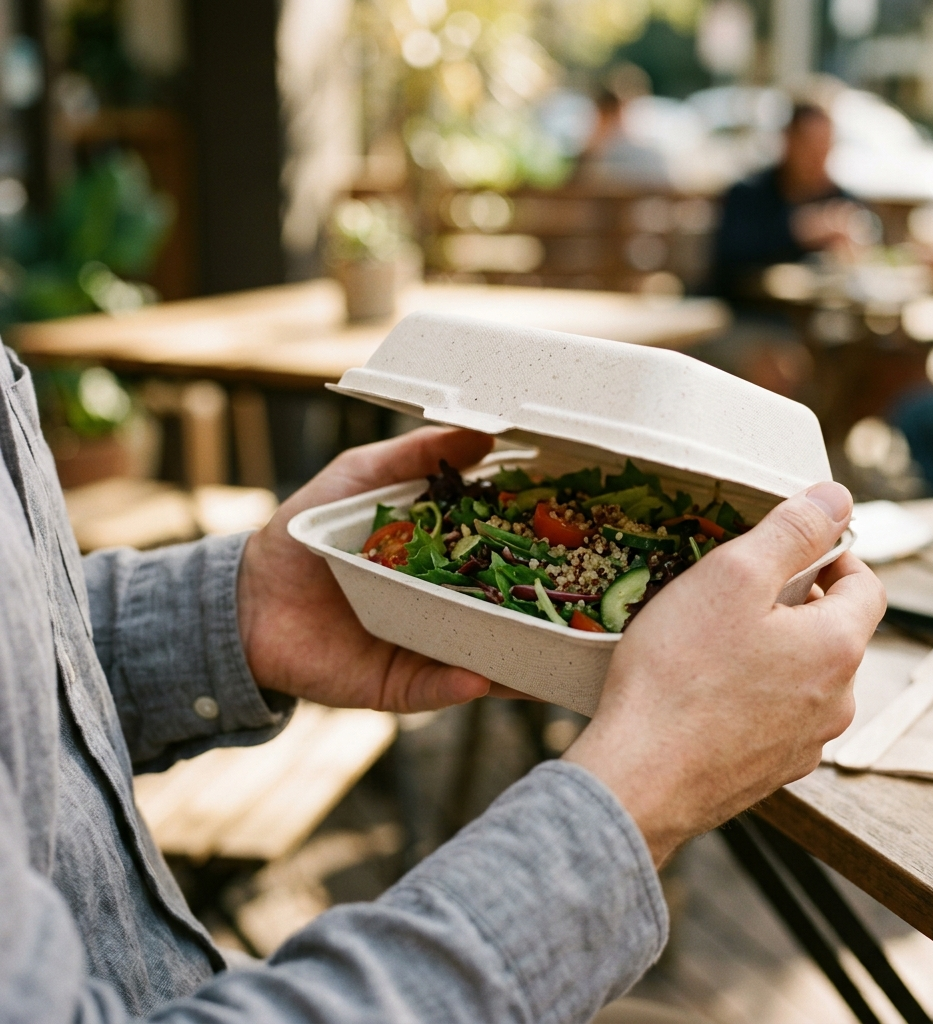
A commuter named Dhruv carefully placed his empty coffee cup which was a small, brown cup labelled “Earth-Friendly & Fully Compostable” into the waste bin. He did so with a brief sense of alignment that he had paid a premium for the fully compostable cup, believing he was opting out of the plastic crisis.
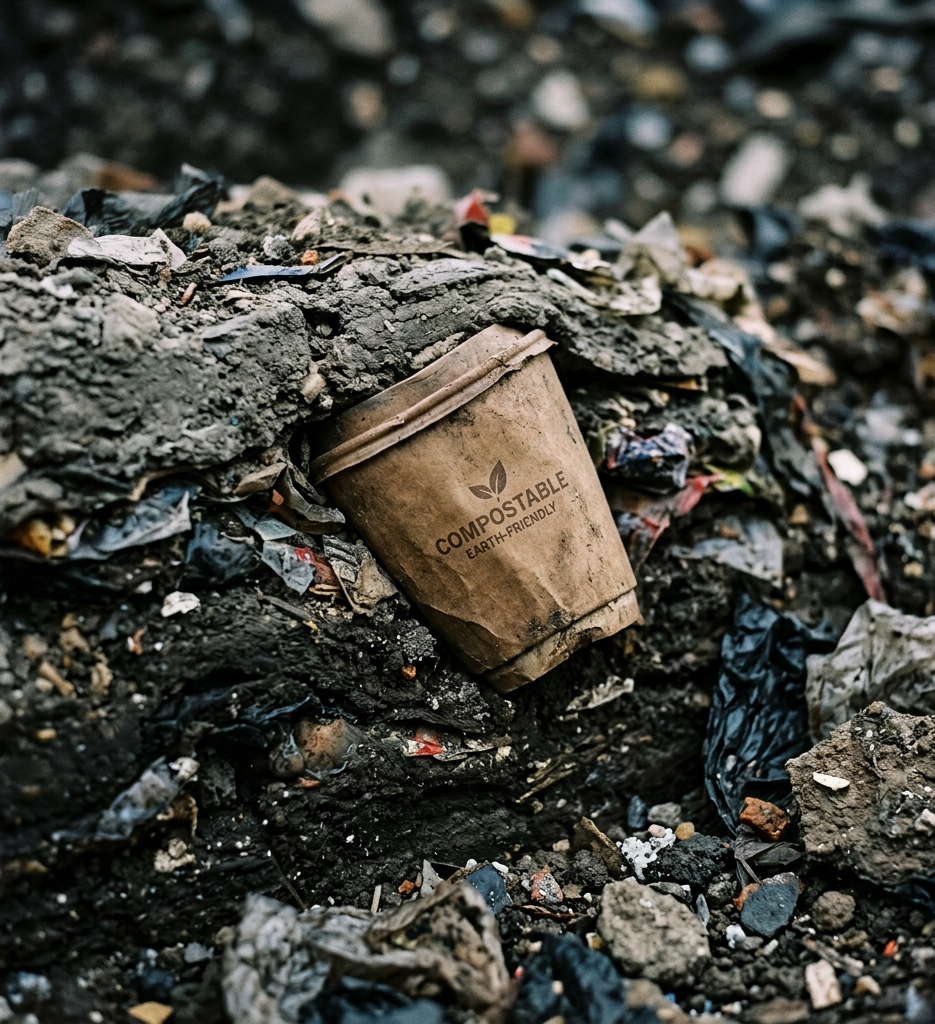
After Dhruv walked past the waste receptacle, he envisioned that the pod would eventually decay to return to the earth as part of a garden or a forest. However, the part of the world where the cup would ultimately end up has no resemblance to either of those beautiful and peaceable places. Rather, the cup would soon be taken to a cold and dark storage vault, where it will remain indefinitely without any signs of degradation.
The Dead End
When the coffee cup went to be disposed of at the regional landfill, it was placed into a large hole then crushed by a compactor weighing ten tons. This is the first challenge in the life cycle of compostable packaging materials.
Landfills, to scientists, are not compost piles but can be viewed as biological tombs. Modern landfills are constructed to avoid decomposition; they are lined with thick high-density polyethylene and topped with clay to keep moisture out and chemicals from leaching into surrounding soils. They are designed to be anaerobic (no oxygen).
For the materials used by Dhruv, this makes it impossible for the PLA or PHA used in compostable packaging to be consumed by the aerobic microbes (organisms that require oxygen) that help consume the carbon from these materials. In the anaerobic layers of a landfill where disposal takes place, there are no aerobic microorganisms present.
Mummification
In the absence of oxygen in one of these cells, something really strange takes place:
Mummification.
In waste audits conducted in 2025, compostable food containers were discovered (dating back 10 years) which are still in the same condition as when they were first made, without having degraded in any way. Because of the absence of heat (140°F or 60°C) and the absence of any movement of air like in a composting facility, the “eco-friendly” material never receives the signal (chemical bonds) to break.
The scientific evidence shows a very different story.
While it may take decades for a traditional plastic bottle to degrade in the ground, a compostable plastic bottle will not be racing ahead of the traditional plastic bottle. The degradation rate of bioplastics placed in a managed landfill in a cold, dark, and dry environment could be so slow that it is virtually zero. Therefore, the coffee cup that Dhruv threw away will probably remain intact for many years to come when the memory of him consuming the coffee will be long forgotten!
The Methane Problem
The more significant, less visible threat exists in this equation, which will result if a compostable material is somehow “lucky” enough to locate a pocket of moisture and anaerobically decompose rather than composting into soil. Instead, it is converted into methane (CH₄) gas.
Methane is produced when organic materials, such as banana peels or biodegradable plastics, are broken down by anaerobic organisms. While methane is produced during the anaerobic decomposition of organic materials, anaerobic organisms produce significant quantities of methane that are of great concern to global warming. Over a 20-year period, methane is up to 80 times more potent as a greenhouse gas than carbon dioxide, making it a major contributor to climate change.
Recent studies have illustrated an ironic truth regarding how people who mean well by choosing natural products may inadvertently increase the global warming potential of their waste by disposing of them in landfills, as compared to non-degradable plastics that do not contribute to global warming.
Where is the Gap?
It’s not the case that material science has been unsuccessful. The infrastructure hasn’t been built yet, all the high-tech materials we’re currently creating require the Industrial Composting Facility to be able to experience the environmental benefits of those materials due to a very specific “key” needed for unlocking.
We’re still using 20th century waste systems for 21st century materials in most cities around the world. There is not a separate method to collect compostables in many areas across the globe. There are many places where if you label something as compostable and have an inadequate separate bin system that doesn’t lead back to the high-heat facility, then you’re essentially giving the person an idea of what to do with a “green” item without having built any place for them yet!
Concluding the Story
As Dhruv boarded his train, he felt he had done his part. But the true story of his coffee cup is a call for a deeper kind of environmentalism. It’s a reminder that we cannot shop our way out of the waste crisis using materials alone.
The “hidden truth” of 2026 is that a compostable cup is only as green as the bin it’s thrown into. Until our waste infrastructure matches our scientific ambition, those “earth-friendly” labels will continue to be mummified in the dark, silent layers of the earth, waiting for an oxygen supply that will never come.
FAQ: The Hidden Life of Waste
Does compostable packaging break down in landfills?
No. Landfills are designed to be anaerobic and dry to minimize contamination. Without exposure to oxygen and biological action, “compostable” substances will essentially act just like ordinary plastics and take decades to decay.
What conditions are needed for compostable materials to degrade?
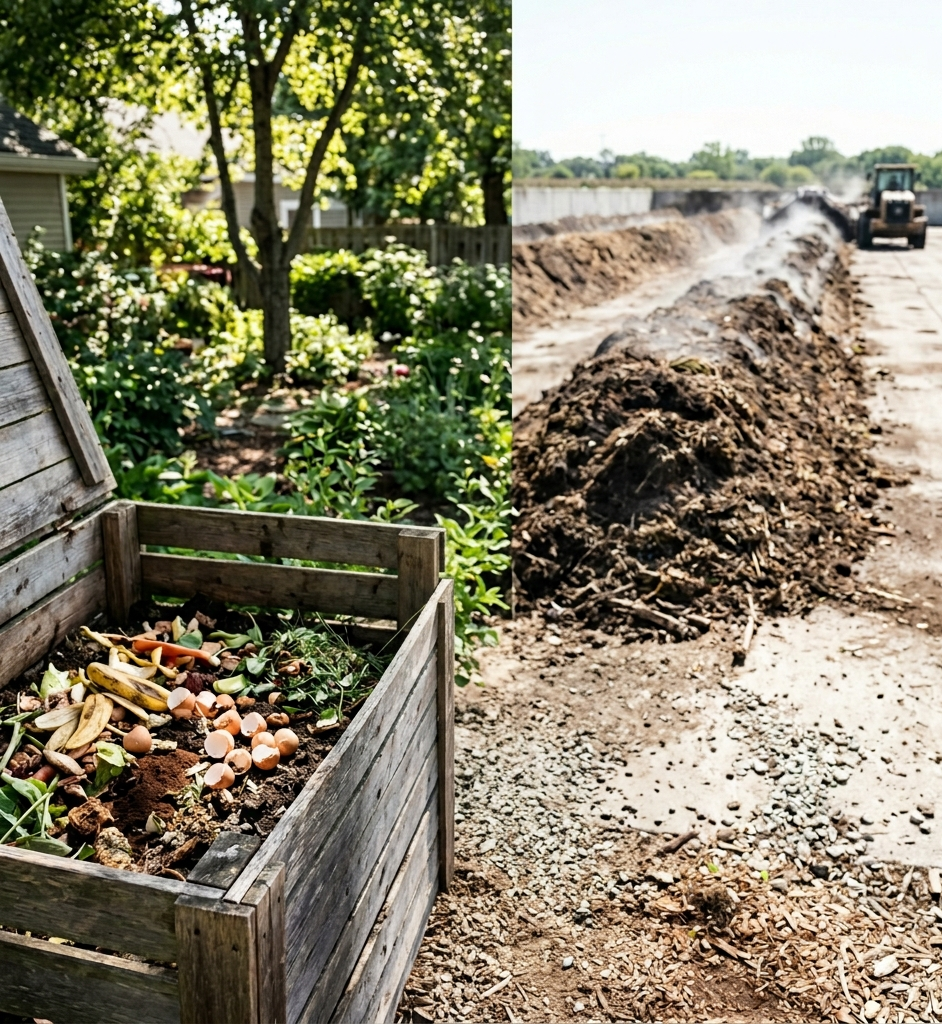
It takes large-scale composting facilities, which maintain a temperature of 140 degrees Fahrenheit, high moisture levels, and an uninterrupted supply of oxygen. This combination is unlikely to occur at all in a landfill or home compost bin.
Are compostable plastics better than regular plastics in a landfill?
Not necessarily. If they eventually decay in anaerobic conditions, they release methane, a highly potent greenhouse gas. Ordinary plastics generally remain inactive in landfills and do not generate greenhouse gases, although they are persistent forever.
Can compostable packaging create microplastics?
Yes. In cases where the material starts to disintegrate due to physical force but lacks the proper biological decomposition conditions, it may split into small bio-plastic particles.