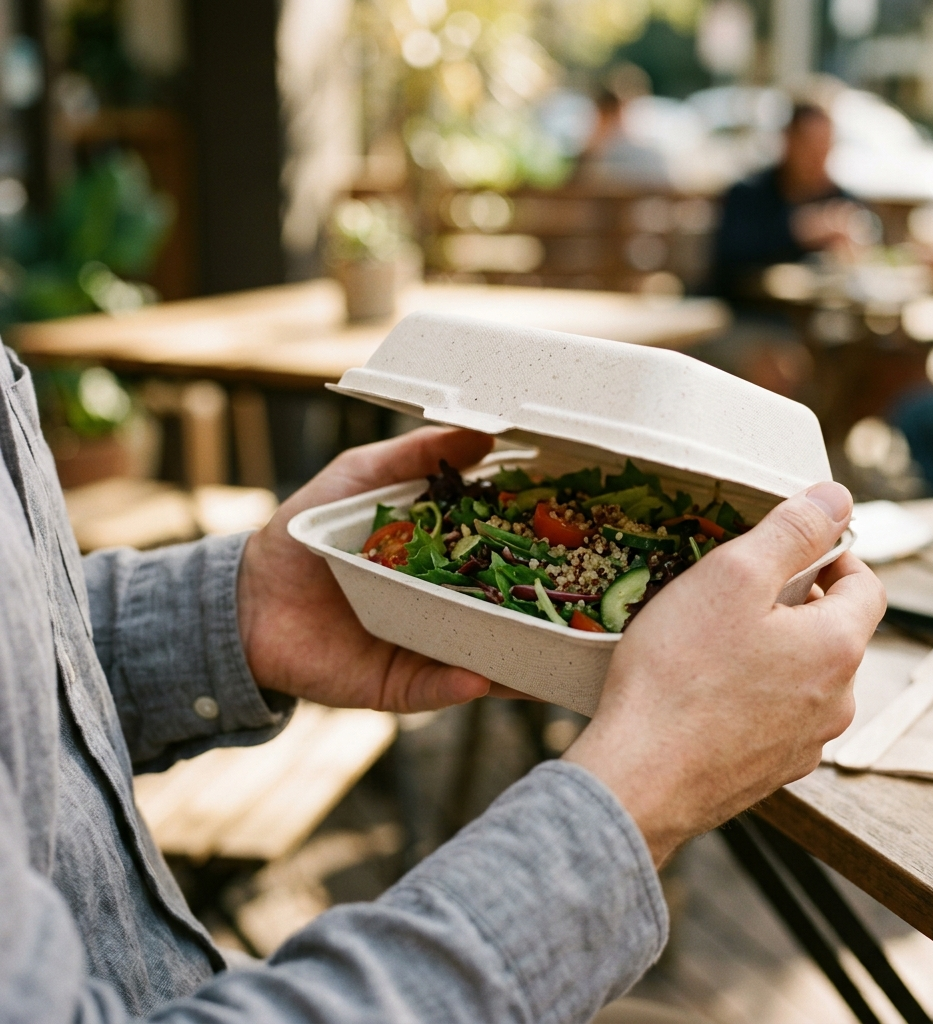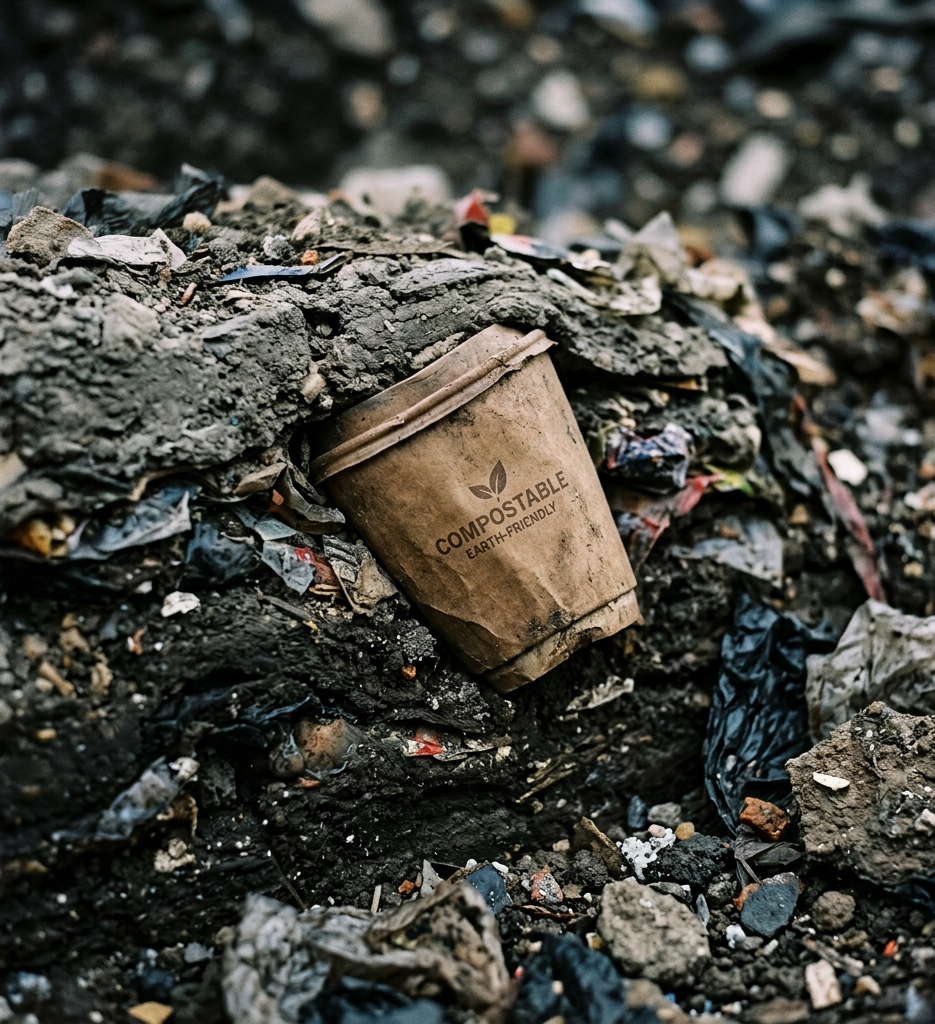
Ever wondered where does your compostable coffee cup actually go after you toss it?
The answer isn’t what most of the people think.
According to research done by ECOlipak, out of the 52% of compostable cups that end up at the composting facilities when the consumer disposes of the cups in the proper bin, the remaining percentage still ends up in the landfills. Compostable coffee cups are expected to generate explosive growth in the future, increasing to $8 billion by 2033 at a CAGR of 12% from the current $2.5 billion in 2025.
What really happens to the compostable cups?
Let’s follow the journey.
This is the full lifecycle guide to the disposal of compostable cups in 2025.
What Makes a Cup “Compostable”?
The Material Science Behind Compostability:
Modern compostable cups consist of:
- Paper substrate: Typically from sustainably sourced paperboard
- PLA (Polylactic Acid) lining: Plant-based bioplastic derived from corn starch or sugarcane
- CPLA lids: Crystallized PLA providing heat resistance
- Water-based inks: For printing and branding
Critical Distinction: Traditional disposable cups use PE (polyethylene) plastic lining that doesn’t break down. Compostable alternatives replace this with PLA bioplastic that degrades under specific conditions.
Compostability Certifications to Look For:
BPI Certified Compostable
TUV Austria OK Compost Industrial
DIN CERTCO
ASTM D6400 (US Standard)
EN 13432 (EU Standard)
Degradation Timeline: ECOlipak states that certified compostable cups degrade within 3-6 months in a commercial composting facility with appropriate temperature and humidity conditions.The Ideal Journey to Industrial Composting Facilities
This is what’s supposed to happen (but rarely does everywhere).
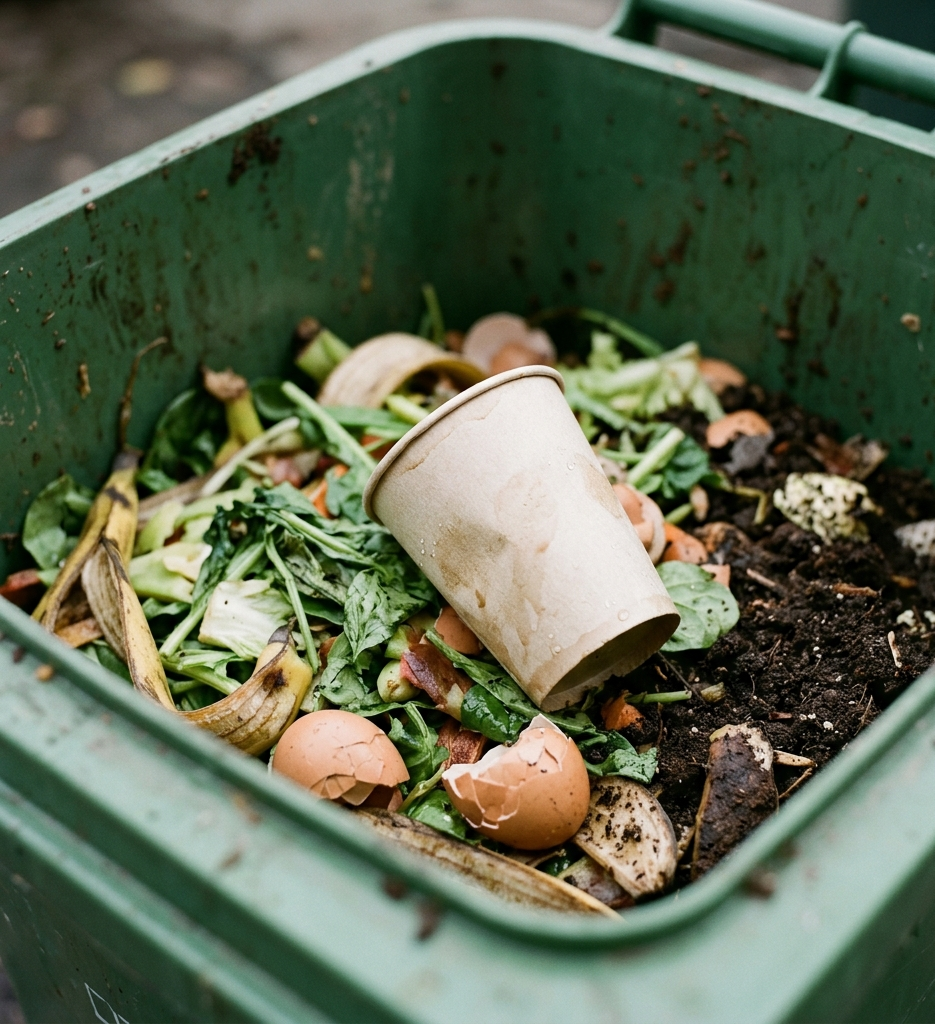
Step 1: Consumer Disposal in Designated Bins
Best practices for disposal:
Procedures for disposing of coffee cups:
- Rinse cup to eliminate as much of the liquid as possible
- Remove all non-compostable elements (e.g., non-compostable plastic stirrers, coffee cup sleeves from compostable coffee cups)
- Place cups into a designated, compost bin (not a recycle or trash dumpster)
- If a cup has a lid that is compostable, keep it on the cup.
Per the research from MTPak Coffee, it is mandatory that coffee cups are rinsed out and placed in the correct composting receptacle before the waste collection facility will accept them.
Step 2: Collection and Transportation
How compostable cups reach facilities:
Municipal or private waste haulers collect organic waste from:
- Commercial establishments (cafés, restaurants)
- Residential curbside programs (where available)
- Drop-off composting centers
- Corporate food waste programs
Infrastructure reality: BioCycle’s 2023 survey found only 200 full-scale food waste composting facilities in the U.S., up just 8% from 185 facilities in 2018, while community composting operations diverted 69,697,344 pounds (35,000 tons) in 2024 alone.
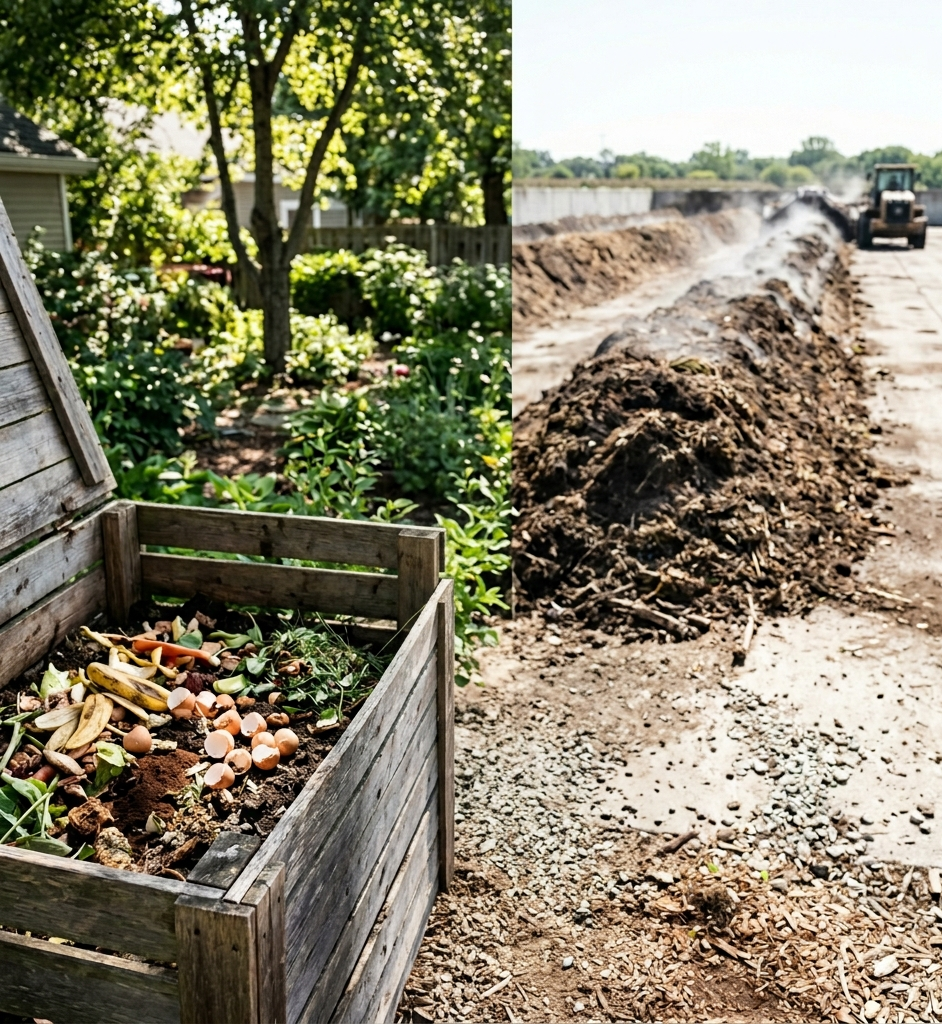
Step 3: Industrial Composting Process
What happens inside commercial composting facilities:
Phase 1: Sorting & Contamination Removal (Days 1-3)
- Visual inspection removes non-compostable contaminants
- Shredding breaks cups into smaller pieces
- Metal detectors remove foreign objects
Phase 2: Active Composting (Weeks 1-8)
- Temperature maintained at 131-170°F (55-77°C)
- Aerobic bacteria break down organic materials
- Regular turning ensures oxygen distribution
- Moisture levels maintained at 50-60%
Phase 3: Curing & Maturation (Months 2-4)
- Temperature gradually decreases
- Microbial communities stabilize
- Final pathogen elimination
- Cups completely decompose into CO2, water, and biomass
Scientific validation: Research confirms PLA breaks down through hydrolysis in industrial composting conditions, with cups achieving greater than 90% mass loss within 60 days.
Step 4: Finished Compost Distribution
Where compost ends up:
- Agricultural soil amendment
- Municipal parks and landscaping
- Retail garden center sales
- Erosion control projects
- Landfill cover material
Environmental benefits: According to BioCycle data, composting increases crop yields by approximately 40%, particularly in drier, warmer climates with acidic soils.
The Unfortunate Reality: Landfill Contamination
What happens when compostable cups miss composting facilities?
“The Landfill Problem”
Statistics tell the story:
- American households with access to directing their compostable packaging to a composting facility: 11% only
- The Sustainable Packaging Coalition has found that only 15% of current composting facilities accept compostable packaging
- Only 45% of composting facilities accept food waste from residential and commercial sources
Critical Issue: If compostable cups are sent to landfills instead of composting facilities, they:
- Do not biodegrade properly due to a lack of oxygen (anaerobic conditions)
- Produce methane gas during slow decomposition
- Consume valuable organic material that would otherwise enrich soil
- Compromise environmental integrity and consumer confidence
Why Compostable Cups End Up in Landfills?
Key failure points:
- Consumer confusion over disposal
- Lack of composting infrastructure in some regions
- Contamination of compost from mixing with other waste
- Cost of implementation for municipalities
- Lack of consistency in regional regulations
The worst-case scenario for compostable cups.
“When Compostable Cups Enter Recycling”
What happens at recycling facilities:
PLA-lined compostable cups should not be recycled in the paper recycling stream because:
- PLA does not dissolve in water like regular paper
- PLA contaminates the paper pulp in recycling plants
- PLA compromises the quality of recycled paper products
- PLA increases the cost of recycling due to contamination cleanup
Analysis by Reliancepak found that in regular paper recycling, paper is mixed with water to create a pulp. However, the PE or PLA plastic does not dissolve in water, thus contaminating the entire batch.
The Infrastructure Gap Challenge
Current composting access reality:
Geographic disparities:
- Urban centers: Better composting access
- Rural areas: Limited to no industrial composting
- Developing regions: Minimal infrastructure
State-level requirements:
- California & Washington: Mandate organic waste collection
- Northeast states: Require corporate food waste collection (limited residential)
- Most U.S. states: No composting mandates
Regional Variations: Where Your Cup’s Journey Differs
North America
United States:
- Number of full-scale food waste composting facilities: 200
- Community composting facilities are growing by 17% on a year-over-year basis.
- 76% of community composters are actively scaling their operations.
- Market value: $1.2 billion in 2024, growing to $3.5 billion in 2033.
Canada:
- More mature municipal composting programs in place.
- Higher rates of residential access.
- Integration with existing organic collection programs.
Europe
Leading infrastructure:
- Prevalence of industrial composting facilities
- Compulsory separation of organic waste in most countries
- Higher composting rates compared to North America
- Rigorous certification standards (EN 13432)
Asia-Pacific
Rapid growth region:
- Increasing investments in composting infrastructure
- Increasing consumer awareness
- Government efforts to reduce plastic waste
- Growing market, expanding at the highest rate globally
The Home Composting Alternative: Does It Work?
Can you compost your coffee cup at home?
Standard vs. Home Compostable Cups
Critical distinction:
Industrial Compostable (Most Common)
- Needs to be composted at 131-170°F
- Needs to be composted with the right amount of moisture and oxygen
- WILL NOT compost at home
- Needs 3-6 months in an industrial composting facility
Home Compostable (Rare)
- Made for backyard composting containers
- Composts at normal temperatures
- Needs 6-12 months to compost
- Needs to be certified as home compostable
Warning: According to MTPak Coffee, compostable cups must be composted industrially, and before backyard composting, it is important to consult your supplier regarding home compostability.
Business Responsibility: What Coffee Shops & Roasters Must Do?
Beyond Handing Out Compostable Cups,
True sustainability requires:
- Partner with Waste Management Companies
- Transparent proof of proper composting
- Traceable diversion from landfills
- Compliance with collection requirements
- Regular reporting and verification
- Educate Customers Actively
- Print disposal instructions on cups
- Offer incentives for proper disposal (free coffee for returned cups)
- Provide designated bins with clear signage
- Train staff to guide customers
- Control End-of-Life Where Possible
According to Emile Carr, an expert from MTPak Coffee, a company that specializes in coffee cups and packaging materials, roasters are advised to “avoid assuming compostable cups will get composted unless they can control or oversee disposal and composting.”
Best practices:
- In-house collection systems
- Partnerships with composting facilities
- Take-back programs
- Corporate composting contracts
Consumer Actions: How to Ensure Your Cup Gets Composted
Your Disposal Checklist:
- Verify if your area has the infrastructure for composting
- Ensure correct bin use: Compost bin (not recycling or trash bin)
- Rinse before disposal
- Ensure no contamination: No plastic stirring sticks or non-compostable sleeves
- Ensure product is certified: BPI or TUV marks
- Ask businesses: What do they do with compostable cups?
Alternative: The Best Choice – Reusables
The most sustainable solution:
- Bring your own cup when purchasing coffee
- Invest in good quality cups for travel
- Join deposit-refund systems
- Support businesses that offer reusables
The Infrastructure Investment Imperative
What’s Needed to Close the Gap
Government actions:
- Investing in composting infrastructure on an industrial scale
- Supporting Extended Producer Responsibility initiatives
- Requiring organic waste separation at local government levels
- Offering grants to support composting infrastructure
- Standardizing rules and regulations at local government levels
Industry roles and responsibilities:
- Developing composting infrastructure
- Developing products that can be composted
- Supporting collection infrastructure
- Educating supply chains
- Reporting transparency metrics
Progress measure: Composting jobs at community levels increased to 544 employees, 319 full-time and 225 part-time, in 2024, with 71% of operations reporting positive revenue growth, a 14-point increase year-over-year.
Innovations Improving the Journey
Emerging Solutions
- Home Compostable Materials
Recent developments producing cups that break down in backyard compost bins without industrial facilities.
- Improved Collection Systems
- AI-powered sorting at facilities
- Smart bins detecting contamination
- Blockchain traceability for materials
- Deposit-return schemes for cups
- Alternative Materials
GaeaStar clay cups: 3D-printed disposable cups made from dirt, salt, and water (decompose easily like Indian Kullads)
Mushroom packaging: Mycelium-based alternatives
Seaweed bioplastics: Marine-sourced materials
- Closed-Loop Systems
- In-store collection and composting
- Corporate take-back programs
- Venue-specific composting partnerships
- Regional composting networks
FAQ: Compostable Cup Disposal Questions
Q: How long does it take for a compostable cup to decompose?
In industrial composting facilities: 3-6 months
In home compost (if certified): 6-12 months
In landfills: Can take years due to anaerobic conditions
Q: Can I put compostable cups in my curbside recycling?
No. Compostable cups will contaminate paper recycling. They must be disposed of in composting facilities or organic waste collection programs.
Q: What percentage of compostable cups actually get composted?
Approximately 52% of compostable cups are delivered to composting facilities if consumers use the correct bin for disposal, according to research conducted in 2025.
Q: Are compostable cups better than regular paper cups?
Yes. When composted correctly, compostable cups do not have the negative effects of regular paper cups. They do not have a petroleum-based plastic lining and will decompose completely and return nutrients to the soil. However, if disposed of in a landfill, the positive effects of compostable cups are lessened.
Q: Can I compost a compostable cup in my backyard?
Only if the compostable cup is certified for home composting. Most compostable cups require industrial composting conditions of 131-170°F, which cannot be attained in a backyard compost bin.
Q: What should I do if my city doesn’t have composting?
- Contact local government requesting composting programs
- Seek commercial composting drop-off locations
- Choose reusable cups instead
- Support businesses with take-back systems
Conclusion: Closing the Loop on Compostable Cups
The journey of a compostable cup reveals a sustainability paradox:
Technologically, it is possible to manufacture cups that can return nutrients to the soil in a matter of months. The compostable coffee cup market is growing rapidly, reaching $2.5 billion in 2025 and growing to $8 billion by 2033. There is growing demand for more eco-friendly products among consumers, with 80% being willing to pay premium prices for such products.
Currently, infrastructure is falling woefully behind:
- Only 52% of compostable cups make it to composting facilities
- Only 200 full-scale composting facilities exist in the US to serve the country’s population
- Only 11% of American households have access to composting facilities
- Only 15% of existing composting facilities accept compostable packaging materials
To move forward in solving this problem, all parties must play a role:
Businesses: Work with composters, educate customers, and control how customers dispose of materials.
Consumers: Use correct bins and facilities, verify infrastructure availability in area, and choose eco-friendly alternatives.
Governments: Build facilities, mandate composting collections, and standardize regulations across state lines.
Industry: Develop better materials, invest in infrastructure, and report data transparently.
The life cycle of the compostable cup should not end in the landfill.
With the right infrastructure in place, the morning cup can be transformed into nutrient-rich compost to fertilize soil in no time. Without it, it is greenwashing with additional steps.
What path will your next cup take?
It depends on the infrastructure, education, and the level of commitment.