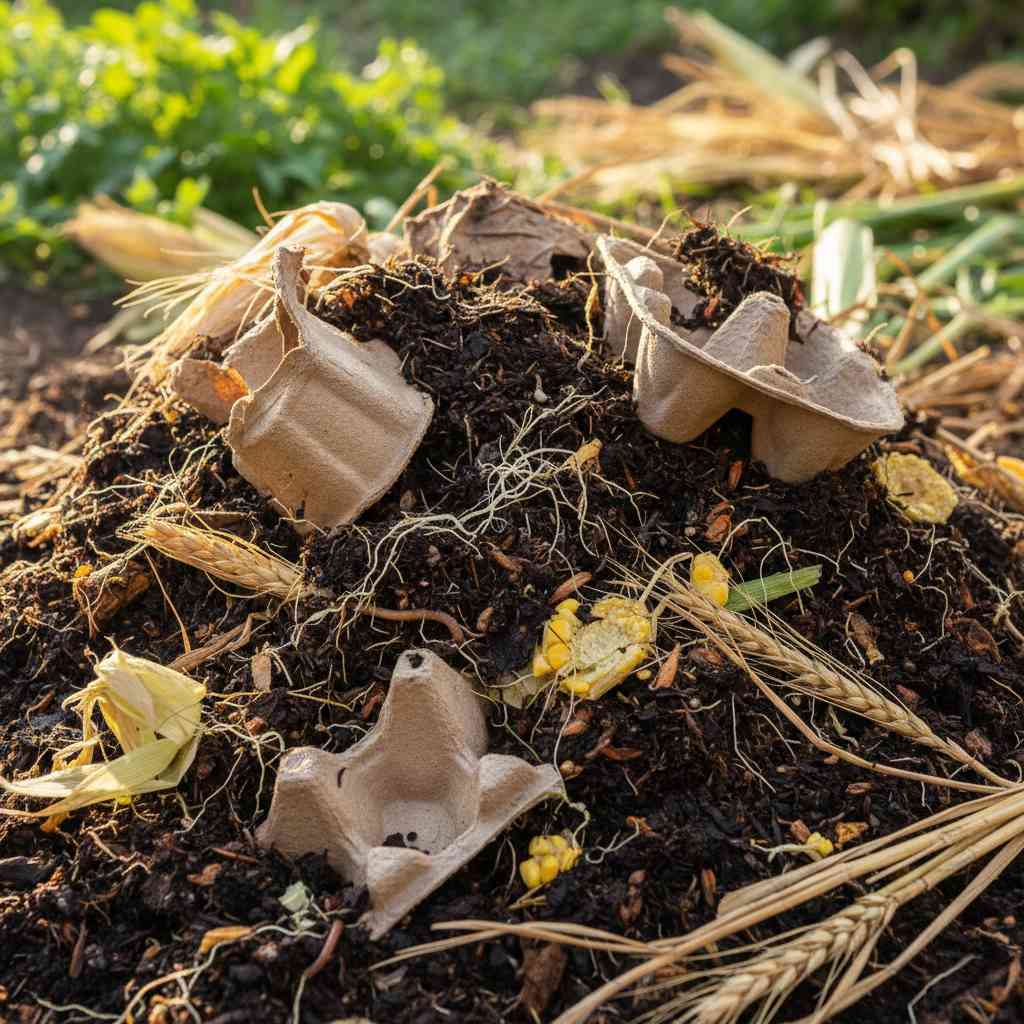

Every winter season, huge columns of smoke emerge from the Indian fields but not from the burning of coal or any other fossil fuels. It is the burning of the leftover crop residues.
India produces 500 million tons of agricultural residues annually. Of these, after meeting the requirements of fodder and household use, 150 million tons of surplus residues remain annually. These surplus residues are often set on fire, resulting in severe seasonal air pollution.
What is interesting is the potential that is being wasted. It is found that the potential for the use of agricultural residues for the production of compressed biogas is around 20 million metric tons annually. The potential for the use of all residues for the production of compressed biogas is found to be nearly 62 MMT annually in the country. But the current level of utilization is extremely low.
It is not just the smoke that is rising from the Indian fields, it is the huge potential being wasted.
The Biogas Potential Nobody’s Capturing:
In an analysis of India’s biogas potential based on gross agricultural residue output of 545 million tonnes of straw and 120 million tonnes of bagasse per annum (based on the ScienceDirect database), the TERI and US EPA partnered with the Global Methane Initiative to study over 602 rural districts. This analysis found that 70 percent of India’s agricultural biomass is suitable for the generation of biogas; using Punjab, Haryana, Uttar Pradesh and Maharashtra as examples, the production of biogas in these regions is most prosperous due to intensive crop cultivation.
In addition to agricultural biomass, the agricultural sector in India also produces approximately 500 million tonnes of agricultural residues and more than one billion tonnes of animal manure each year (approximately 180 million cubic meters/day of biogas generated). Therefore, by using the available crop residues and manure for energy production instead of allowing them to be released as emissions, the agricultural sector in India has the potential to generate 2.7 million tonnes of carbon dioxide daily.
Research published in the ScienceDirect database based on environmental science shows that the total production of compressed biogas using rice straw, wheat straw, sugarcane bagasse, cotton stalk, corn cob and maize stalk is equal to 686 million tonnes, of which 234 million tonnes are surplus agricultural residues available for conversion to energy. In fact, each year, burning agricultural residues in the Indo-Gangetic plains represents an annual loss of 1,165 million cubic meters of biogas potential.
The Economic Value Chain:
Now, here is what gives this technology its revolutionary edge: government statistics, according to Fortune Business Insights, indicate that as of December 2024, there are 115 operational CBG plants, 174 under construction, and 425 yet to start. Collectively, SATAT-commissioned plants sold 22,097 tonnes of CBG during FY 2023-2024, thus establishing commercial viability.
Research published on ScienceDirect, under the heading of techno-economic assessment, reveals that CBG technology has the potential to generate three distinct revenue streams: waste treatment facilities, organic fertilizer manufacturing, and gaseous fuels. It has been established that 80 percent of the capital costs are incurred on machinery and equipment, with 26 percent of operating costs incurred on feedstock, with government subsidies ensuring economic viability.
Another “goldmine” is represented by the “digestate co-product.” In fact, according to research done by Mongabay India, the bio-manure generated in the process of biogas production is high in carbon content and “can be a wonderful substitute for chemical fertilizers,” with the potential for 6.78 million tons of biofertilizers annually in the country, as studies on the bio-waste from livestock in the state of Haryana in India showed.
Why This Matters Now?
The mismanagement of agricultural waste results in nearly 13.72% of the total greenhouse gas emissions in India, which is considerably higher than the global average of 11%, as stated in ScienceDirect.
This waste management would not only prove to be beneficial for the environment, but it would also provide energy security, reduce the burning of fields and air pollution, and provide additional income and employment to the people.
This is not only one step towards saving the environment, but it would also provide several benefits to the nation.