
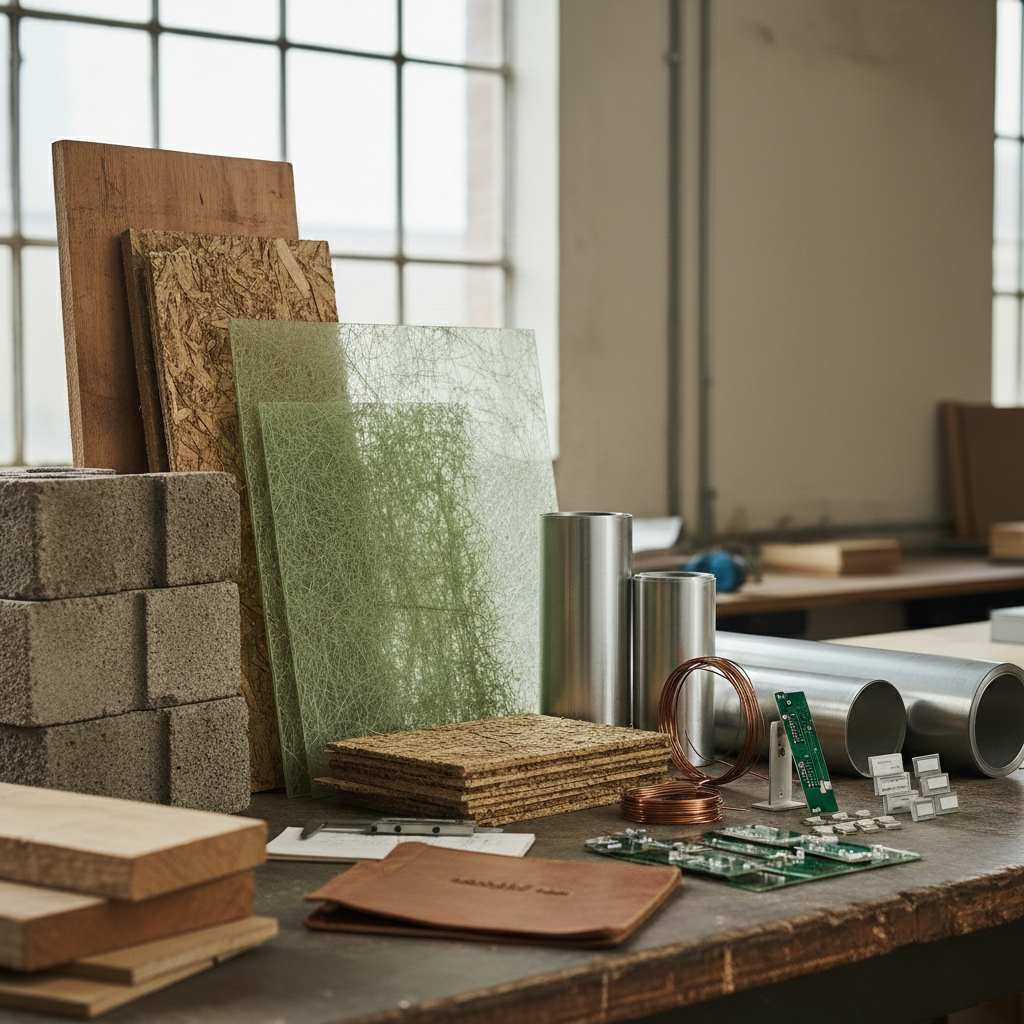
Are you aware of the number one factor affecting a product’s environmental footprint?
It is the material from which it is made.
Clever design and production techniques improve sustainability but will not affect the overall environmental impact. In fact, research demonstrates that this misconception can be proven through scholarly articles published by ScienceDirect comparing traditional building materials (such as wood or concrete) against low-carbon (i.e. sustainable) materials.
According to this research, 84% of the material’s total carbon footprint is attributed to embodied carbon while only 16% of the carbon footprint is attributed to transportation. Additionally, the difference between the carbon footprint of traditional versus sustainable building materials was very high; according to research performed by researchers using BIM-based models, traditional materials’ carbon footprint is 171.93 kg CO2 equivalent/SF and the carbon footprint of sustainable materials is only 62.25 kg CO2 equivalent/SF. This means material substitution can reduce carbon emissions by as much as 64%, with no effect from the conscious design of those materials.
Does this imply that designing/building materials is not important?
It does.
And the data supports this position but this is material science reality, and the numbers don’t lie.
The Impact of Materials Production on Climate Change:
There are many truths about material production emissions that designers do not want to hear. Between 1995-2015, CO2-equivalent material production emissions from all construction activities increased 120%, and now total 11 billion tons annually (Nature Geoscience). Over this same period, the proportion of global emissions represented by material production increased from 15% to 23%, with approximately 40% of the embodied carbon footprint of materials resulting from construction activities.
The United Nations Environment Programme (UNEP) has estimated that 37% of annual global emissions come from both buildings and construction-related activities. Although operational emissions will decrease from 75% to 50% of total sector emissions in the future, the embodied carbon associated with materials such as cement, steel and aluminum continues to receive very little attention. Research published in the PMC shows that alternative materials/techniques to build can achieve up to 90% reduction in CO2 emissions at various construction stages.
Research published in the journal Materials and Design indicates that by selecting low-carbon (embodied carbon) materials during the early design phases, designers can make accessible fast and reliable environmental assessments without requiring complete life cycle assessments with each revision. The research also indicates that AZ61Mg alloy is the most environmentally burdensome of expected lifetimes for automobiles when compared to traditionally used alloys. Additionally, data regarding business case for advanced building refurbishment versus demolition/reconstruction supports the conclusion that advanced materials reuse during refurbishment is more beneficial than demolition/reconstruction due to reduced material transit distances.
Why A Good Design Can’t Compensate for Bad Materials?
In order to determine how certain packaging and food ware materials affect environmental sustainability over the entire life of the product, the Journal of Environmental Science and Technology performed an analysis to examine life cycle assessment (LCA) attributes associated with packaging and food service materials (e.g., recyclability, recycled content, compostability, and bio-based material) and their relationship to lower environmental impacts throughout the product’s life cycle. The results of the LCA study indicated that, while good design of packaging and food service products are a significant contributor to environmental success, using a poor quality material may result in an environmentally failed product.
The ScienceDirect analyzed the direct impact of materials on the sustainability of buildings stating that the use of specific materials may greatly affect the life-cycle impact of the material. The results revealed that when printed sensors are made with a bio-based polyethylene substrate and copper-based inks, they will create 39 percent less GHG emissions (42 g of CO2 eq/sensor to 25.7 g of CO2 eq/sensor) than when produced using a silicon chip as the substrate regardless of the design optimization.
The U.S. Department of Energy has confirmed that objectivity when comparing materials based on consistent LCA boundaries and assessment of environmental performance as part of the product design process and not as a post-production activity is critical to obtaining objective comparisons between like materials (energy use, water use, etc.).
Why Material Selection Must Lead Design?
Since studies from different institutions have demonstrated the material decisions in the early stages control environmental outcomes more than any following optimizations, research published in Nature Materials focuses on the importance of life cycle assessment tools, which “help identify ways towards more sustainable materials by considering burdens in both the product use phase and the production phase.”
Clever engineering can improve efficiency but material choice determines 60-90 percent of lifecycle impact before design even matters.