What’s worse than single-use plastic?
It’s not reusable products (those are genuinely better).
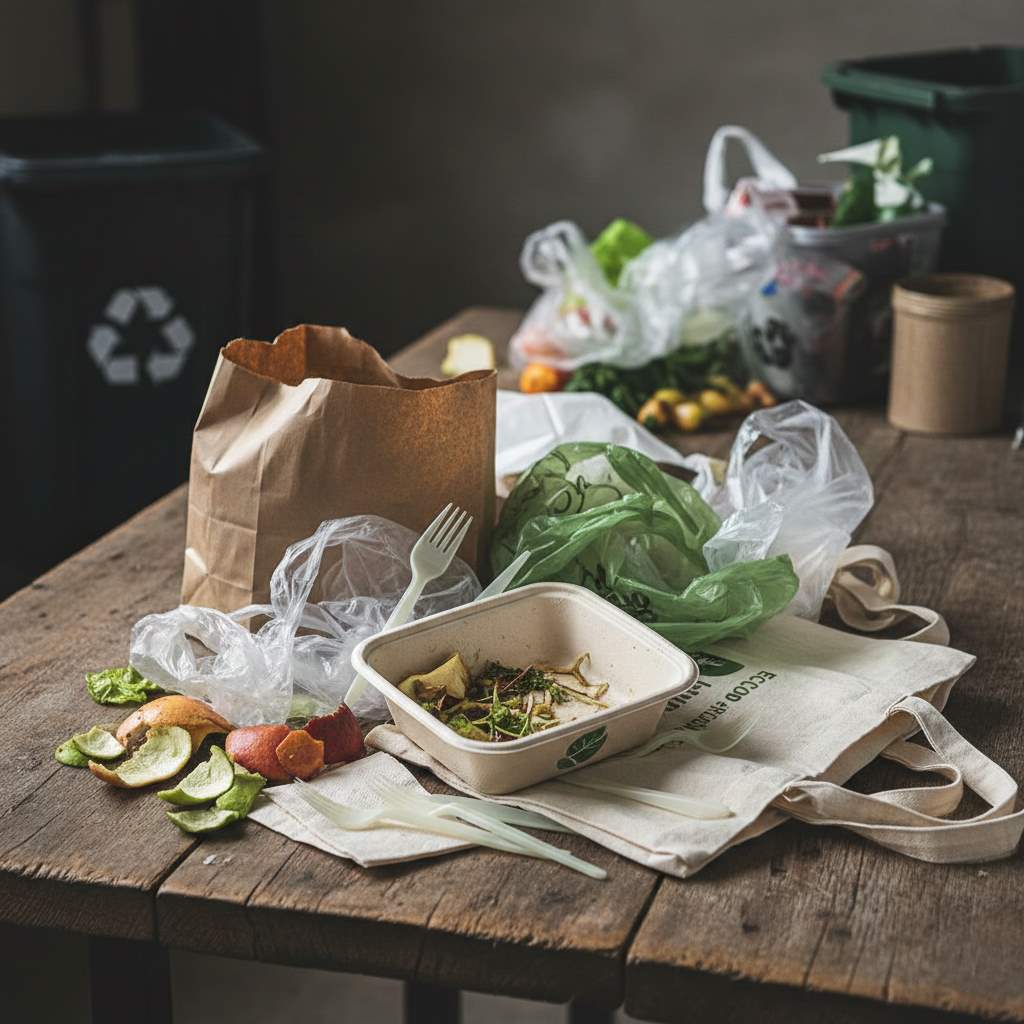
It’s the supposedly eco-friendly single-use alternatives that everyone’s rushing to adopt without asking the uncomfortable question that is, are we just trading one environmental disaster for another?
According to a study on waste management across many areas that do not manage their waste equally, single-use plastic alternatives have a greater impact on the environment than standard plastic bags. According to the World Economic Forum, when we replace plastic with another material, the carbon footprint is an average of 3 times greater than that of the original item. In addition, many of the new materials do not break down naturally.
This problem reaffirms that we are missing the mark with single-use alternatives and suggests that switching to different types of materials is not the solution.
The Reality of Green Marketing:
According to the World Economic Forum, research after study reveals that compared to traditional plastic shopping bags, paper bags create a far greater amount of carbon emissions. A reusable cotton bag would need to be used between fifty and 150 times to produce the same carbon emissions as one traditional single use plastic shopping bag, while a single paper bag would have to be reused at least four to eight times before producing the same carbon emissions as one such plastic bag.
Research done by the Life Cycle Initiative and Montgomery College’s Institute of Paper Science and Technology found that in Singapore, all non-woven polypropylene, paper & cotton alternatives to conventional plastic shopping bags all produced lower environmental impacts in a range of categories, where suitable disposal options were not available. The Food Standards Agency reported that although paper has some benefits like being recyclable and socially acceptable, it has limited reusability, and has great environmental concerns during the manufacturing process.
According to the research done by the Net Zero Action Accelerator, it is estimated that twenty percent of the total amount of energy used in the entire food supply chain is used in the production of paper bags. In addition, the use of paper/plastic, such as PLA, which is derived from biological materials, can create a large amount of greenhouse gas emissions, especially methane, when disposed of, which can harm the world because, according to the research done by PMC, methane has 25 times the global warming potential than carbon dioxide.
The Biodegradability Illusion:
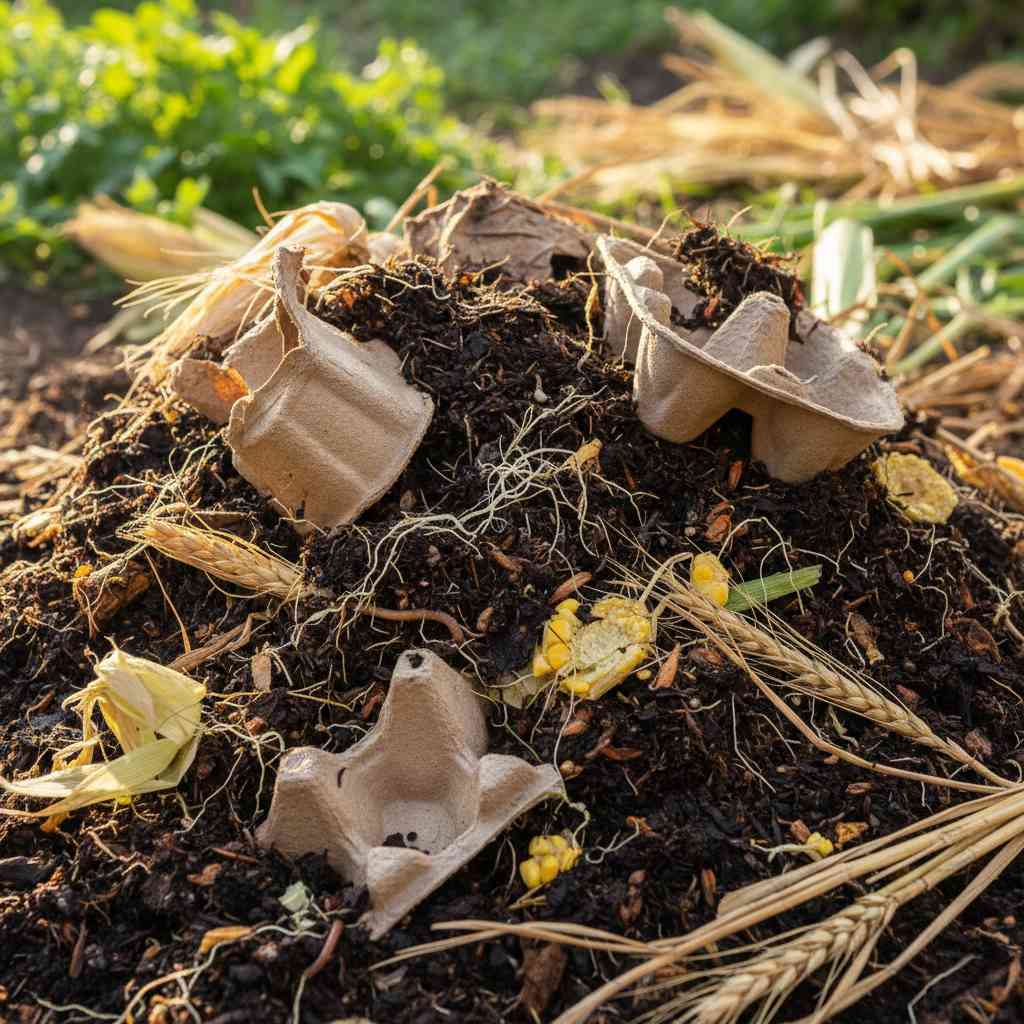
The difficult part about “biodegradable” plastic is that many do not biodegrade where they are expected to biodegrade. Research from MDPI has shown that standard plastic can last decades in landfills due to a lack of oxygen, however even biodegradable plastic like PLA or starch only breaks down with little or no oxygen. Multiple studies demonstrate that the majority of biodegradable plastics are made to decompose in nature, which is a problem since recyclable and composted plastics are common.
Another issue related to putting biodegradable materials into landfills is that they can create methane when there is not enough oxygen. Research on bioplastics showed that while bioplastics can be environmentally friendly, they are made from naturally occurring materials that decompose at different rates, and the market for biodegradable plastic remains small i.e. roughly 1% of the market.
The Food Standards Agency states that PHA material integrity over a long period is not known as the cost of making these biodegradable plastics currently exceeds the cost of producing regular plastics. Multiple studies at many universities indicate that there is a need for appropriate disposal systems for biodegradable products, as well as complete biodegradation, for bioplastics to help the environment, but that these factors are seldom satisfied.
Why Single-Use Anything Is a Problem?
The real problem is the idea of disposability. The research done by UNEP reinforced that if the product can be reused often, the impact will be reduced and thus, reusability must be prioritized over materials. As shown in the research done by the World Economic Forum, it’s recommended that effective policy interventions are made to eliminate wastage, and the environmental impact must be taken into consideration. Marketing-wise, they’re positioned as eco-friendly solutions but many alternatives have worse environmental impacts unless properly disposed and actually reused multiple times.