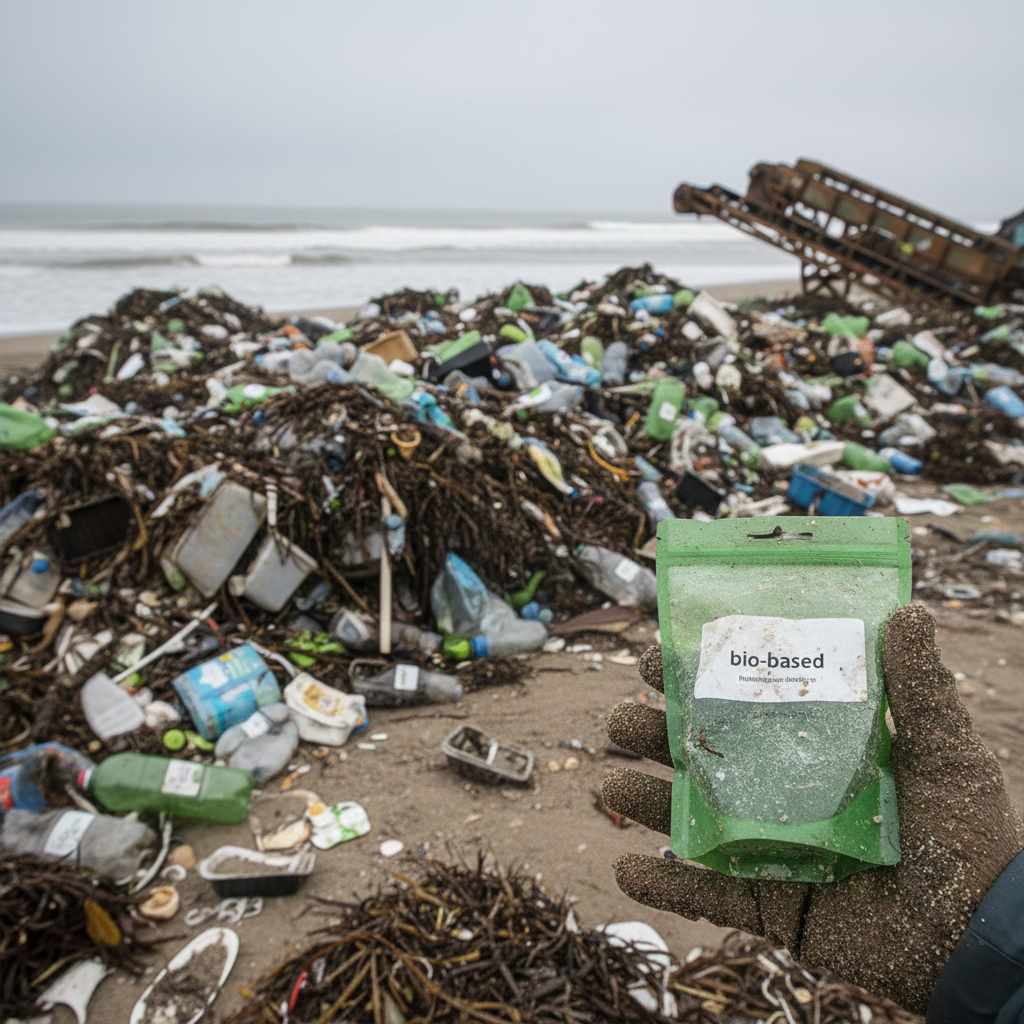
We have spent many years living in a world of convenience that is based on a foundation of polymer chains. Unfortunately, as the “plastic tide” continues to rise, research from The Pew Charitable Trusts (2025) is predicting the amount of plastic pollution will increase to 280 million metric top a year by 2040, the global outcry is at an all-time high. There are now a number of “eco-friendly” alternatives on the shelves in stores. The question is whether we are actually solving the issue or simply renaming the result.
Master in Marketing
The most popular substitute for bioplastics is bioplastic itself. It has a very organic, almost botanical ring to it. But as was stated in a review in the DTU Research Database in 2024, “bioplastic” is a very general term that encompasses two completely different concepts, bio-based (plant-based) and biodegradable (able to be broken down).
The problem is that a plastic can be bio-based, such as Bio-PET, and still be the same thing as regular plastic. This means that it will not decompose in the ocean any faster than a regular soda bottle. It’s “green” because it’s made from renewable resources, but its “end-of-life” is still the same old story.
The Myth of the Being Called ‘Biodegradable’
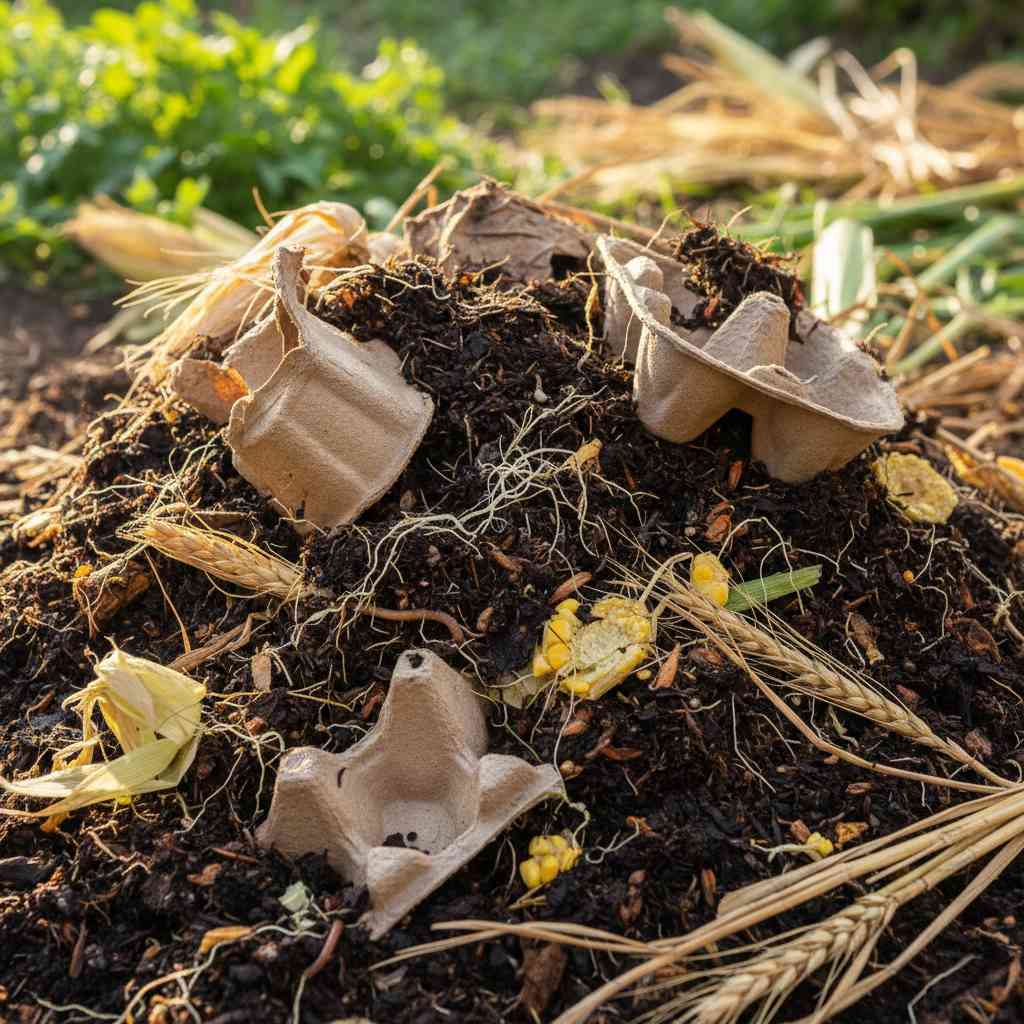
There is a widespread mistaken belief amongst the average consumer that if an item is labelled as ‘biodegradable’ this means it will just vanish from nature when discarded. This is not the case according to science. Research published in MDPI in 2025 concludes that many of these products will require industrial level composting where there are temperatures in excess of 55 Celsius to decompose. In the coldness of an ocean or even in a homemade compost these products could remain in their original form for many years.
In addition, a recent study in Science Daily (2025), showed that even after these products do start to degrade they can release Biodegradable Microplastics (BMP’s) which are typically smaller than normal sized PM’s; however, they are not necessarily any less harmful and can enter the food chain as aggressively as conventional PM’s do.
The Hidden Cost of Green Alternatives:
The switch to bio-plastics does not come without costs, it includes:
- Competing Uses for Land: Growing from agricultural (food) to petrochemical (bio- plastics) will create a conflict for production and could increase demand for land globally for our food supply.
- Increased Greenhouse Gas Emissions: The development of bio-plastics requires high-tech production methods along with the intensive farming of crops, resulting in overall higher greenhouse gas emissions than traditional recycling methods.
- Greenwashing: Using “green” or “eco” labels and marketing without true change or reduction of resources to encourage continual high-consumption behaviours, and/or moving toward products that will require continual changes after their introduction.
If we are merely replacing 450 million tons of fossil-plastic with 450 million tons of plant-plastic, then we have not solved the waste crisis, we have merely changed the source of the problem.
According to reports by Oceana (2025), the answer to this problem is not merely substitution. A sustainable future is not one in which we discover a “better” way to dispose of things, but one in which we do not dispose of things at all.